
How Detailed Bleach Art Is Created on Black Clothing
Detailed bleach art on black clothing is not made in one fast step. It develops slowly through background work, controlled brush marks, fabric reaction, contrast building, and final handmade details. This article follows a real handmade bleach art process from the first marks to a finished gothic design.
Quick navigation
Handmade Bleach Art Process Overview
Real handmade bleach art is a process, not a print
The most important thing about handmade bleach art is that the artwork is created directly on the fabric. It is not a printed graphic placed on top of clothing. The design appears because bleach removes dye from the textile and reveals lighter tones underneath.
This makes every piece slightly unpredictable. The fabric, dye quality, bleach strength, timing, and brush pressure all influence the final result. That is why detailed bleach painting on black clothing has a handmade character that cannot be copied perfectly.
Handmade proof
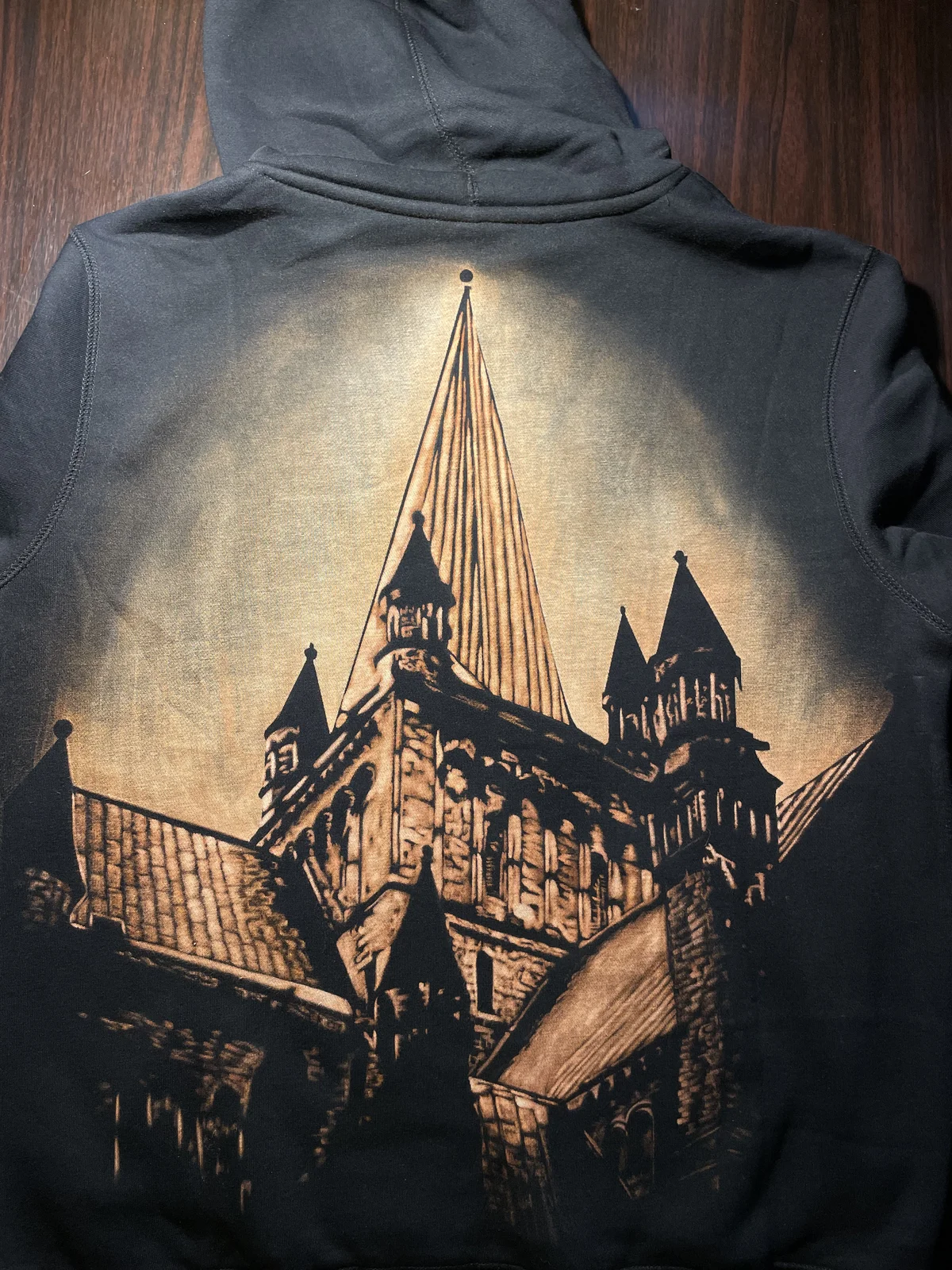
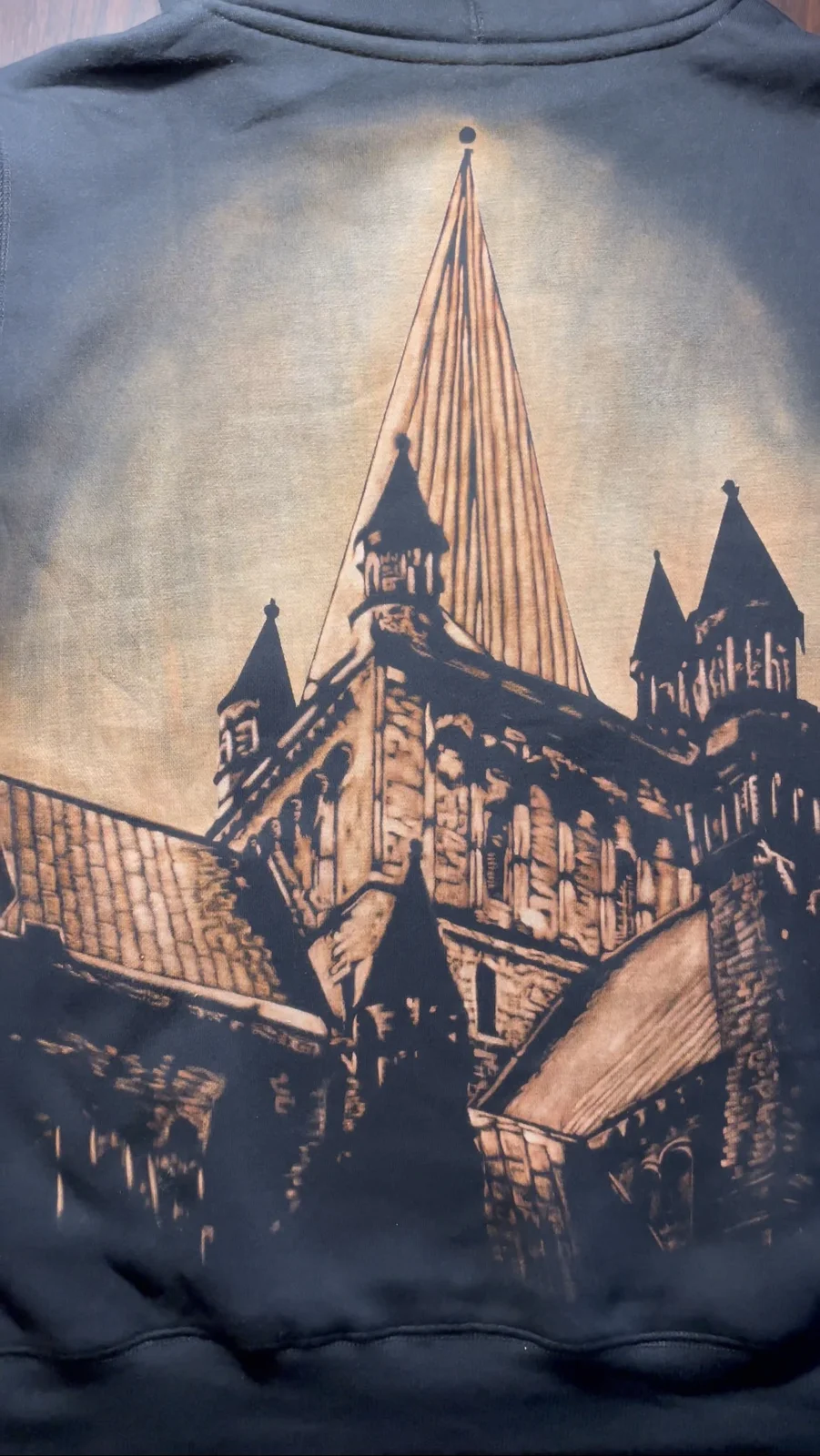
Process photos are important because they show the artwork developing on real fabric: the first background stage, visible brushwork, a half-finished design, and the final handmade result.
If you are looking for a simpler beginner tutorial, read How to Bleach a Design on a Shirt . This article focuses on a more detailed artistic bleach art process.
A careful bleach art process also means working safely
Bleach art is beautiful, but bleach should always be handled with care. The process should be done in a ventilated space, with protected surfaces, controlled application, and enough patience to avoid soaking the fabric too aggressively.
Detailed bleach painting is not about using more bleach. It is about using small, intentional marks and watching how the fabric reacts. This helps protect the clothing and gives the artist more control over the final result.
For a deeper explanation of rinsing and stopping the bleach reaction, read How to Neutralize Bleach Painting .
Why detailed bleach art works so well on black clothing
Black clothing gives bleach art its strongest visual drama. The dark base creates contrast, while the bleached areas can shift into warm brown, copper, beige, orange, gray, or soft cream tones depending on the fabric dye.
For a gothic architecture design, that contrast matters even more. Arches, shadows, stone-like textures, light beams, and dramatic depth need both darkness and highlights. In detailed bleach art, the black fabric is not just a background. It becomes part of the composition.
Dark base
Black fabric keeps the artwork moody, bold, and high contrast.
Warm reaction
Bleach often reveals copper, beige, or amber tones inside the dye.
Natural depth
The untouched dark space helps the handmade design feel dimensional.
To understand fabric reactions better, see Best Fabrics for Bleach Art .
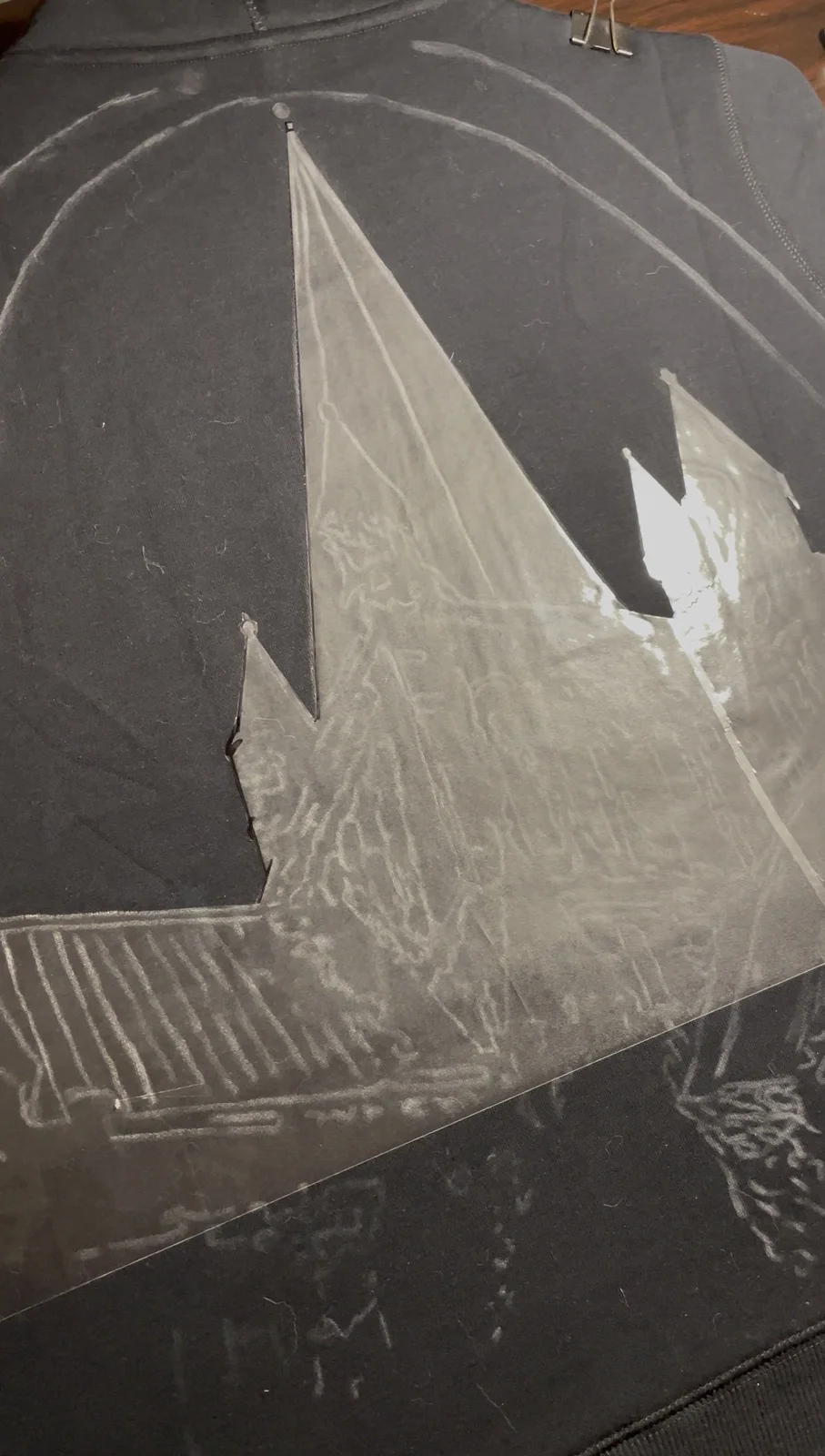
Step 1: building the background and atmosphere
Detailed bleach art on clothing usually begins with the atmosphere, not the smallest details. The background gives the artwork direction. It decides where the viewer’s eye will go and where the strongest contrast will later appear.
In a gothic design, the background may suggest light, fog, old stone, shadow, or depth. These first marks do not need to look finished. They are the foundation for everything that comes after.
Why the first layer should stay controlled
Bleach continues reacting after it touches the fabric. Starting softly gives more control. It is easier to build contrast later than to repair an area that became too bright too early.
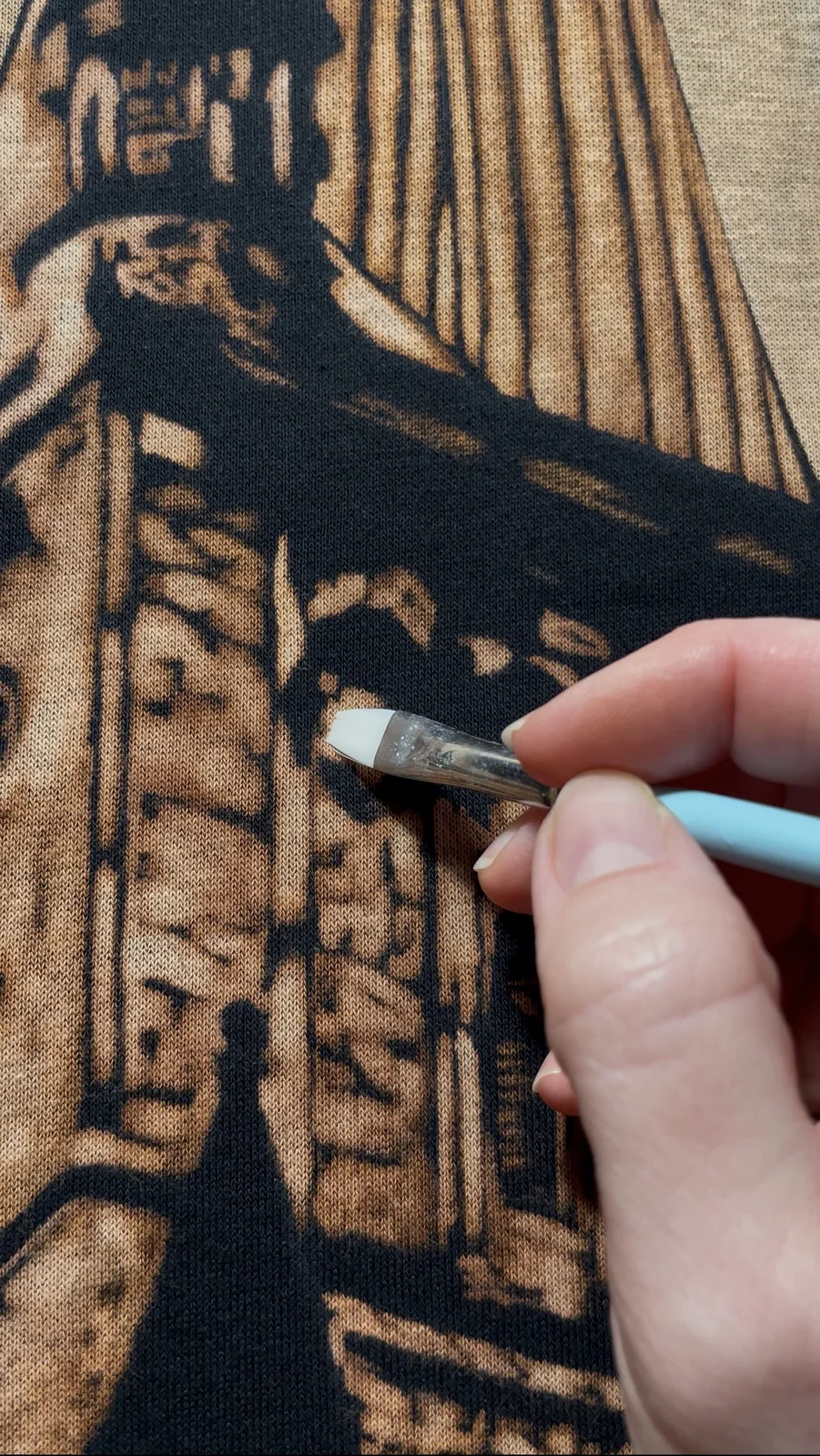
Step 2: creating form with controlled bleach brushwork
Brushwork is where the handmade nature of bleach art becomes visible. Every mark depends on how much bleach is on the brush, how quickly the fabric reacts, and how much pressure is used.
Unlike normal paint, bleach does not cover the fabric with color. It changes the fabric itself. This means the artist has to watch the reaction while working. A line may start subtle and then become stronger as the dye lifts.
Fine marks
Thin brush marks help suggest edges, cracks, architecture details, and delicate highlights.
Soft transitions
Softer strokes help create atmosphere, shadows, background light, and natural depth.
Why detailed bleach art develops gradually
A detailed bleach painting does not look finished in the middle of the process. At first, the design can look rough, uneven, or too soft. That is normal. The artwork becomes stronger as the composition gains contrast, depth, and visual balance.
This gradual development is one reason handmade bleach art feels different from printed clothing. A print is reproduced from a finished file. Bleach art is discovered and adjusted directly on the garment.
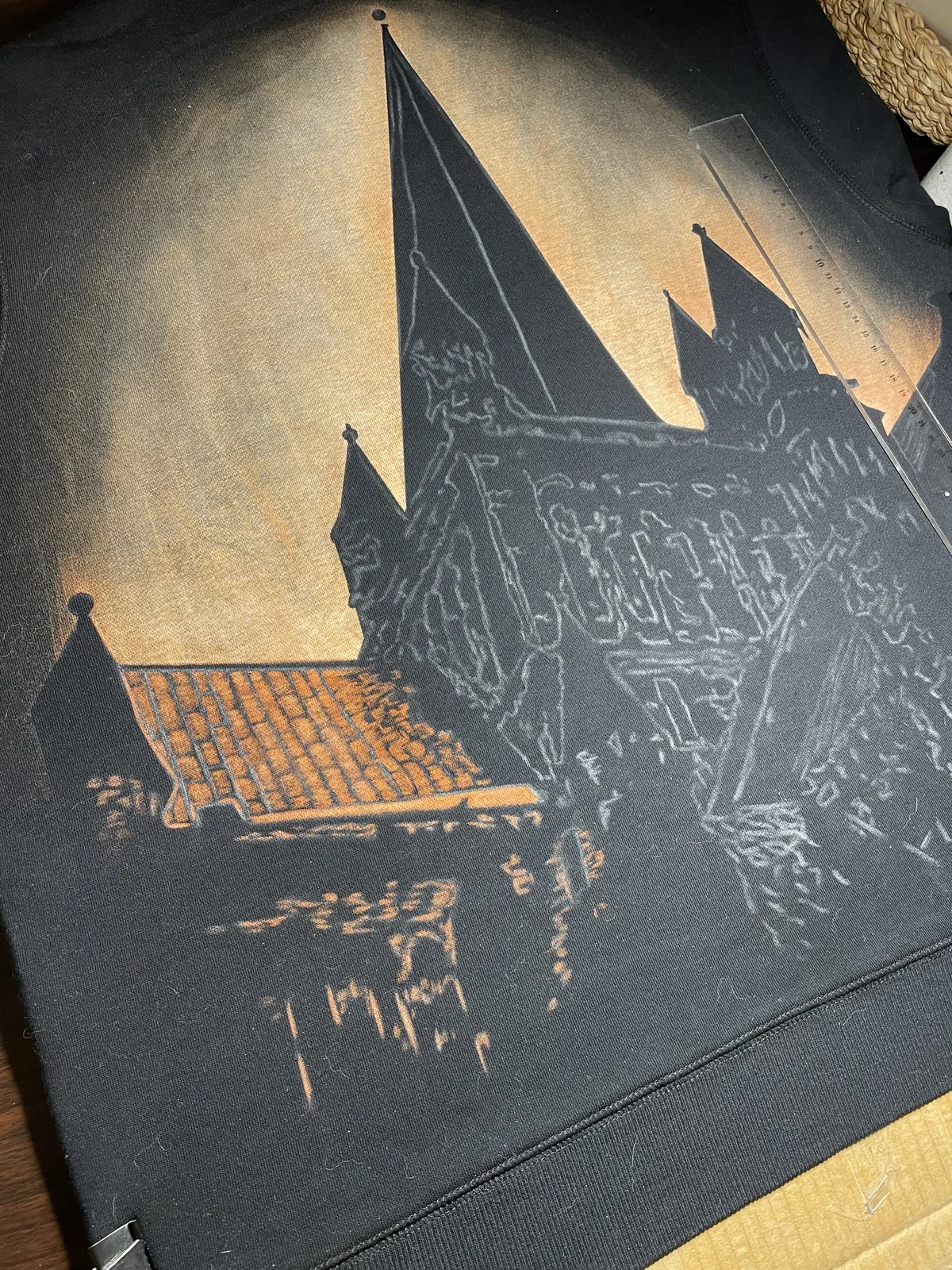
Step 3: the moment when the artwork starts to emerge
The middle stage is often the most interesting part of the bleach art process. The design is no longer just a background, but it is not finished yet. The main structure begins to appear, and the artist can decide where to push the contrast further.
For gothic architecture, this is where the image starts to feel dimensional. Dark areas remain untouched to hold shadow, while bleached areas create the impression of stone, light, and aged texture.
- The main silhouette becomes readable.
- Highlights begin to separate from the dark fabric.
- Texture starts to look intentional instead of random.
- The design gains depth without losing the black base.
Balancing highlights and dark space
Strong bleach art is not only about making areas lighter. It is also about knowing what to leave dark. The untouched black fabric gives the artwork contrast, mood, and breathing room.
Keeping the design wearable
Clothing art has to work on a moving body, not only as a flat picture. Placement, scale, negative space, and contrast all affect how the final piece looks when worn.
Step 4: final details, contrast, and finishing the design
The final stage is where detailed handmade bleach art becomes polished. Small highlights can sharpen the architecture. Softer areas can remain atmospheric. Dark zones can frame the design and keep the artwork from becoming flat.
The goal is not to bleach every part of the fabric. The goal is to create a balanced handmade design where every bright area has a purpose. This is especially important for gothic artwork, where mystery and shadow are part of the visual language.
For care after the piece is finished, read How to Wash Bleach Art Clothing .
Handmade bleach art vs printed clothing designs
Printed clothing usually starts with a digital image and repeats the same design many times. Handmade bleach art clothing is different because each piece is created directly on the garment.
The result is more personal and less predictable. Small variations in the fabric reaction, brush marks, and contrast make every bleach art piece unique. That uniqueness is part of the value of handmade clothing.
Printed graphic
A design is placed on top of the fabric and can often be reproduced again and again.
Handmade bleach art
The design is created by removing dye from the clothing, so each result has its own natural reaction and handmade character.
Can this process work on shirts and hoodies?
Yes. The same bleach painting principles can work on shirts, hoodies, sweatshirts, and other dark cotton clothing. A shirt is often easier for beginners because the fabric is lighter and flatter. A hoodie can give a more dramatic final piece, but it usually requires more planning because of seams, pockets, thickness, and shape.
This is why detailed bleach art is often treated as wearable artwork rather than a simple DIY decoration. The clothing itself becomes part of the composition.
FAQ about detailed bleach art on black clothing
Is detailed bleach art painted or printed?
Handmade bleach art is created directly on the fabric. It is not a print. Bleach removes dye from the clothing and creates lighter areas inside the textile.
Is bleach art safe for clothing?
Bleach can weaken fabric if it is overused, so controlled application matters. Detailed bleach art should be built gradually, without flooding the garment, and the finished piece should be rinsed and cared for properly.
Why does bleach art look different on every piece of clothing?
Every garment reacts differently because fabric content, dye quality, bleach strength, and timing can all change the final tone and contrast.
Can bleach art be very detailed?
Yes. With controlled brushwork, careful timing, and strong contrast planning, bleach art can be used for detailed portraits, gothic designs, symbols, architecture, and fantasy artwork.
Does handmade bleach art last?
Bleach art usually remains visible because it changes the dye in the fabric instead of sitting on top like surface paint. Proper washing and care help preserve the garment.
Looking for handmade bleach art clothing?
At HandPaintedCloth, every bleach art piece is created by hand with attention to contrast, fabric reaction, placement, and the final mood of the garment. If you love dark clothing, gothic details, and real handmade process, explore available pieces or request a custom design.
Related bleach art guides
Learn more about bleach art techniques, fabric choice, durability, washing, and custom handmade clothing.
Bleach Hoodie Designs
Explore handmade bleach hoodie designs featuring gothic artwork, dark aesthetics, detailed brushwork, and dramatic contrast on black fabric.
Pillar GuideBleach Art on Clothing: Complete Guide
Learn what bleach art is, how it works, and why handmade pieces look unique.
ProcessHow Bleach Art Is Made on Clothing
A broader look at sketching, preparation, bleach reaction, and final artwork.
DurabilityDoes Bleach Art Wash Out?
Understand why bleach art changes fabric dye and how long the design can last.