
What Fabric Is Best for Bleach Art? Cotton vs Polyester Real Tests
The best fabric for bleach art is usually a dark, thick cotton or a high-cotton blend, but real results are not always that simple. I tested cotton, polyester, hoodie fleece, blended shirts and cotton tote bags to show why bleach painting can look orange, yellow, grey, white, patchy or almost invisible on different fabrics.
Short answer
What fabric bleaches best for bleach art?
For most bleach art clothing, the safest choice is a black cotton shirt around 240 gsm or a good 80% cotton / 20% polyester hoodie. Very thin shirts can get damaged, pure polyester often barely reacts, and even 100% cotton can behave differently depending on dye, weave, surface finish and fabric treatment.
Best overall
Thick black 100% cotton, about 240 gsm, smooth surface, no heavy fuzz.
Best for hoodies
80% cotton / 20% polyester or quality 100% cotton fleece.
Worst choice
Thin fabric under 190 gsm or 100% polyester when you need strong contrast.
Quick navigation
Best Fabrics for Bleach Art: Tests and Sections
Why fabric choice matters so much in bleach art
Bleach art on fabric is different from normal fabric painting. You are not adding paint on top of the textile. You are removing or changing the dye already inside the fabric. That is why the same bleach, the same brush and the same hand can create completely different results on two black shirts.
In my own bleach painting tests, some black cotton shirts turned warm orange almost immediately. Some became yellow. Some high-quality 100% cotton shirts needed three or more layers of undiluted bleach before the design became visible. One premium cotton hoodie barely reacted at all until I used several strong layers, and even then the result went more grey-white than orange.
So when people ask “what fabric is best for bleach painting?”, the honest answer is: start with cotton, but always test the exact garment. Fabric composition matters, but so do fabric weight, dye, texture, weave, fleece, factory finish and even how much bleach the surface can absorb.
My practical rule
I do not judge a garment only by the label. A label can say 100% cotton, but the shirt may still react slowly, turn pale grey, have too much fuzz, or be too thin for detailed bleach art. I always prefer a small bleach test before using a new shirt, hoodie or tote bag for a serious design.
Is 100% cotton good for bleach art?
Yes, 100% cotton is usually the best fabric for bleach art, especially when the shirt is black, smooth and thick enough. Cotton normally reacts faster than polyester and gives stronger contrast, which makes it easier to build highlights, shadows, soft gradients and small details.
But not every cotton shirt is equal. From my experience, shirts under about 190 gsm are risky when you work with strong bleach gel, undiluted bleach, or many layers. The fabric can become weak, and in some cases holes may appear. For detailed bleach designs on fabric, I prefer shirts around 240 gsm.
Very heavy cotton, for example around 270 gsm, can also work, but the surface matters. If the shirt has visible fuzz or a brushed texture, the brush can drag, the bleach line can look less clean, and small details become harder to control.
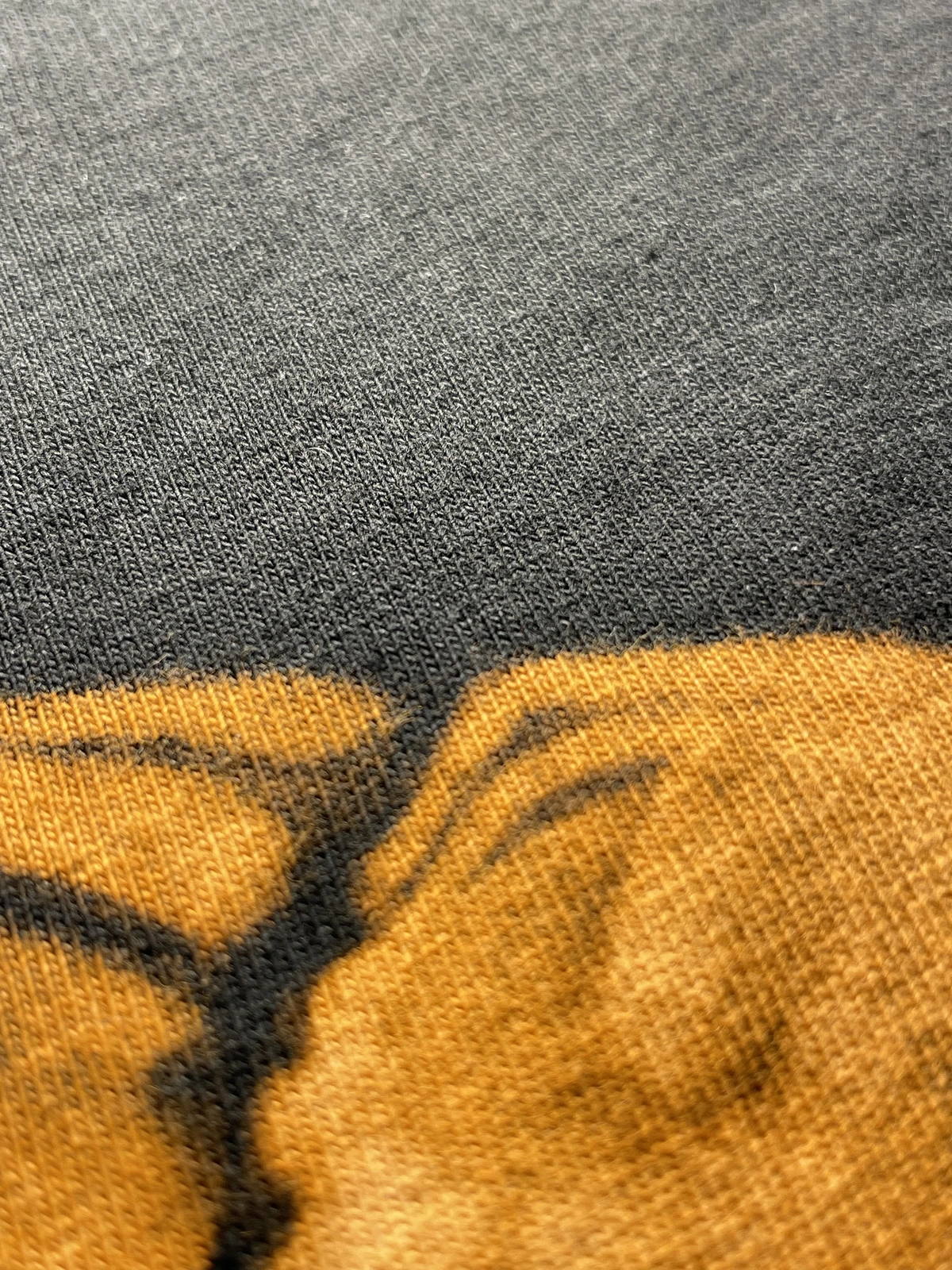
Cotton can still surprise you
One of my 100% cotton shirts was thick and high quality, but the fabric had more surface fuzz. It did not give the usual orange bleach art color. Instead, the reaction moved more toward yellow. The finished design still looked beautiful, but the drawing process felt less smooth.
Another 100% cotton shirt reacted only after several layers of strong bleach. The result was not warm orange, but more white and grey. That kind of shirt can be interesting for bold designs, but it is harder for tiny details and soft portrait shading.
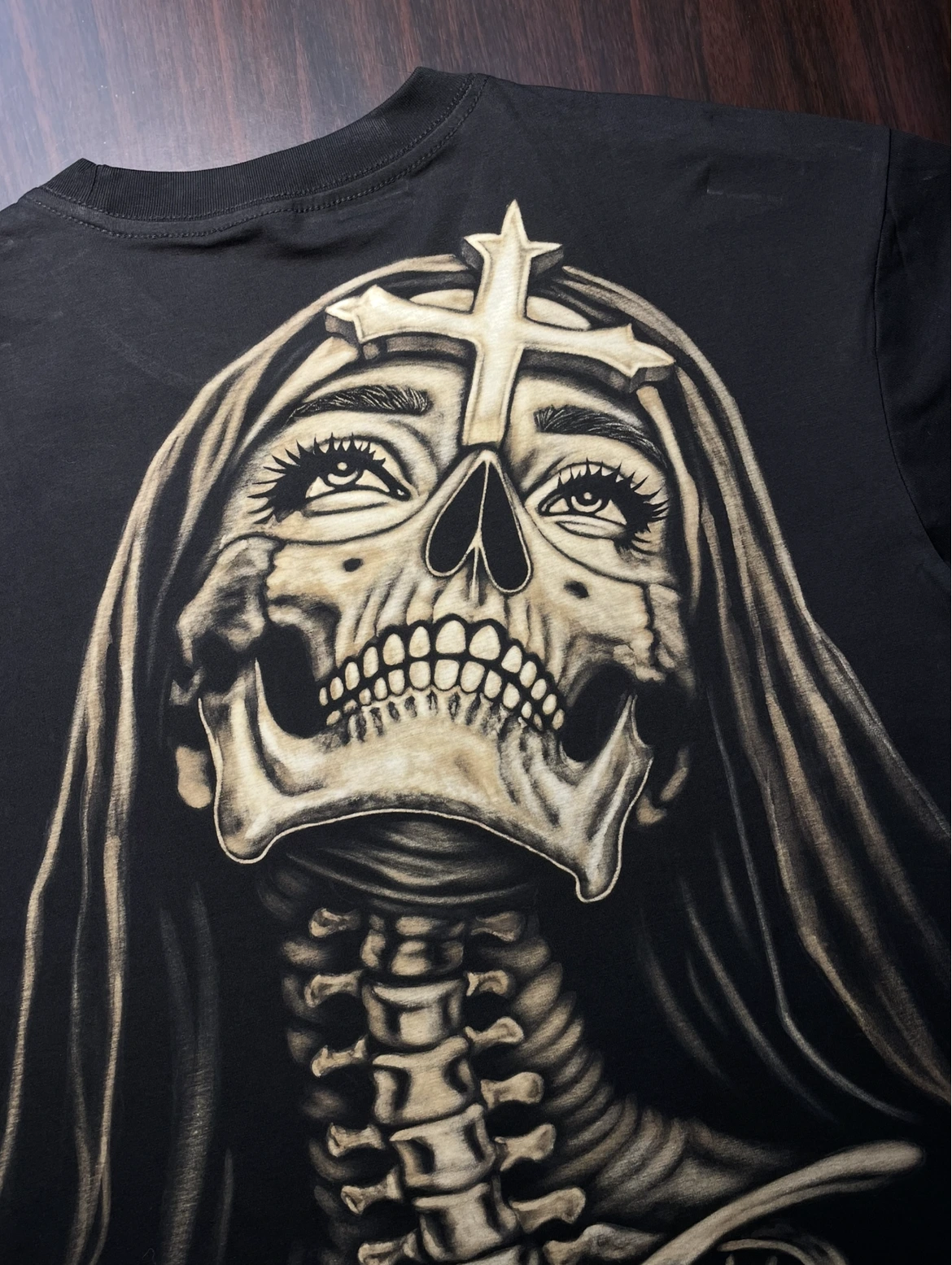
Real bleach reaction
Why bleach art looks different on every shirt
A common beginner mistake is thinking that all black cotton shirts will bleach to the same color. In reality, bleach on black fabric can turn orange, copper, yellow, beige, grey, almost white, or sometimes look patchy.
This happens because bleach reacts with the dye, not only with the fiber. Two shirts can both be labeled 100% cotton, but if the black dye, finish or surface treatment is different, the bleach painting result can also be different.
- Orange reaction is common on many black cotton shirts.
- Yellow reaction can happen on some cotton fabrics with different dye or surface texture.
- Grey-white reaction can appear when the dye lifts differently or needs many bleach layers.
- Patchy reaction often comes from uneven absorption, fabric finish or too much bleach in one area.
Why does bleach turn some shirts orange and others white?
One of the biggest surprises in bleach art on black fabric is that two black shirts can react in completely different ways. One shirt may turn bright orange or copper, while another becomes pale yellow, grey or almost white.
This happens because bleach reacts mostly with the fabric dye, not only with the cotton or polyester fibers themselves. Different dye formulas, factory treatments, fabric finishes and surface textures all change the final bleach reaction.
Even two shirts labeled 100% cotton can produce very different bleach art colors and contrast levels. That is why experienced artists usually test every new garment before starting a large or detailed design.
Does bleach painting work on polyester?
Bleach painting on polyester is usually weak and unpredictable. Pure polyester often resists bleach because the fiber and dye behave differently from cotton. The design may barely appear, stay very faint, or develop too slowly for controlled artwork.
This does not mean every polyester blend is useless. It means that 100% polyester is not my first choice when I want strong bleach art contrast, detailed portraits, clean highlights or a reliable handmade result.
If you want to test polyester, do it on a hidden area first. Do not start a full design before you know whether the fabric will actually change color.
Do cotton polyester blends work for bleach art?
Yes, some cotton polyester blends work surprisingly well for bleach art. The important thing is not only the percentage on the label, but how the fibers, dye and fabric structure react together. A high-cotton blend can sometimes bleach beautifully, while a 100% cotton garment can still be difficult.
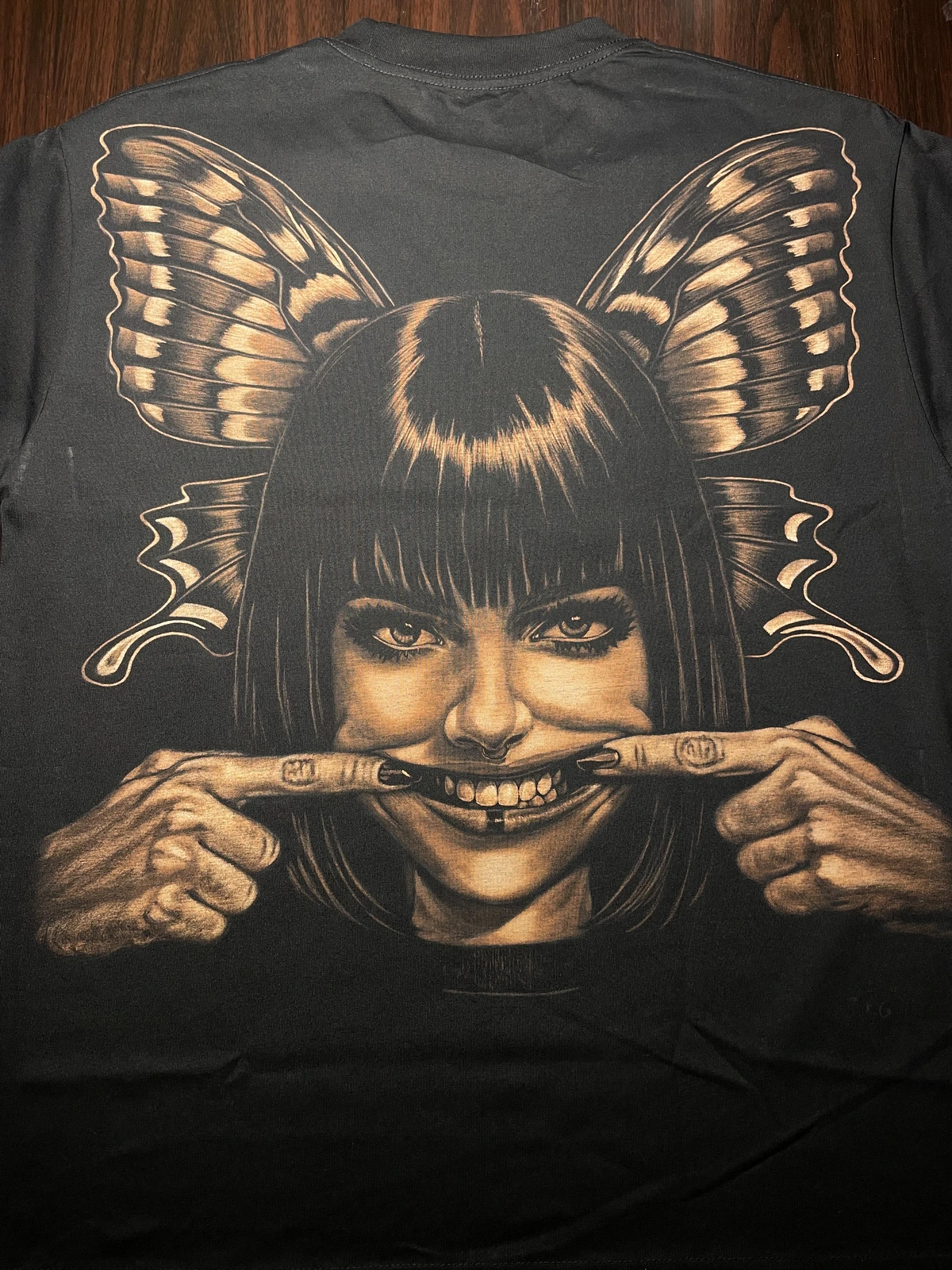
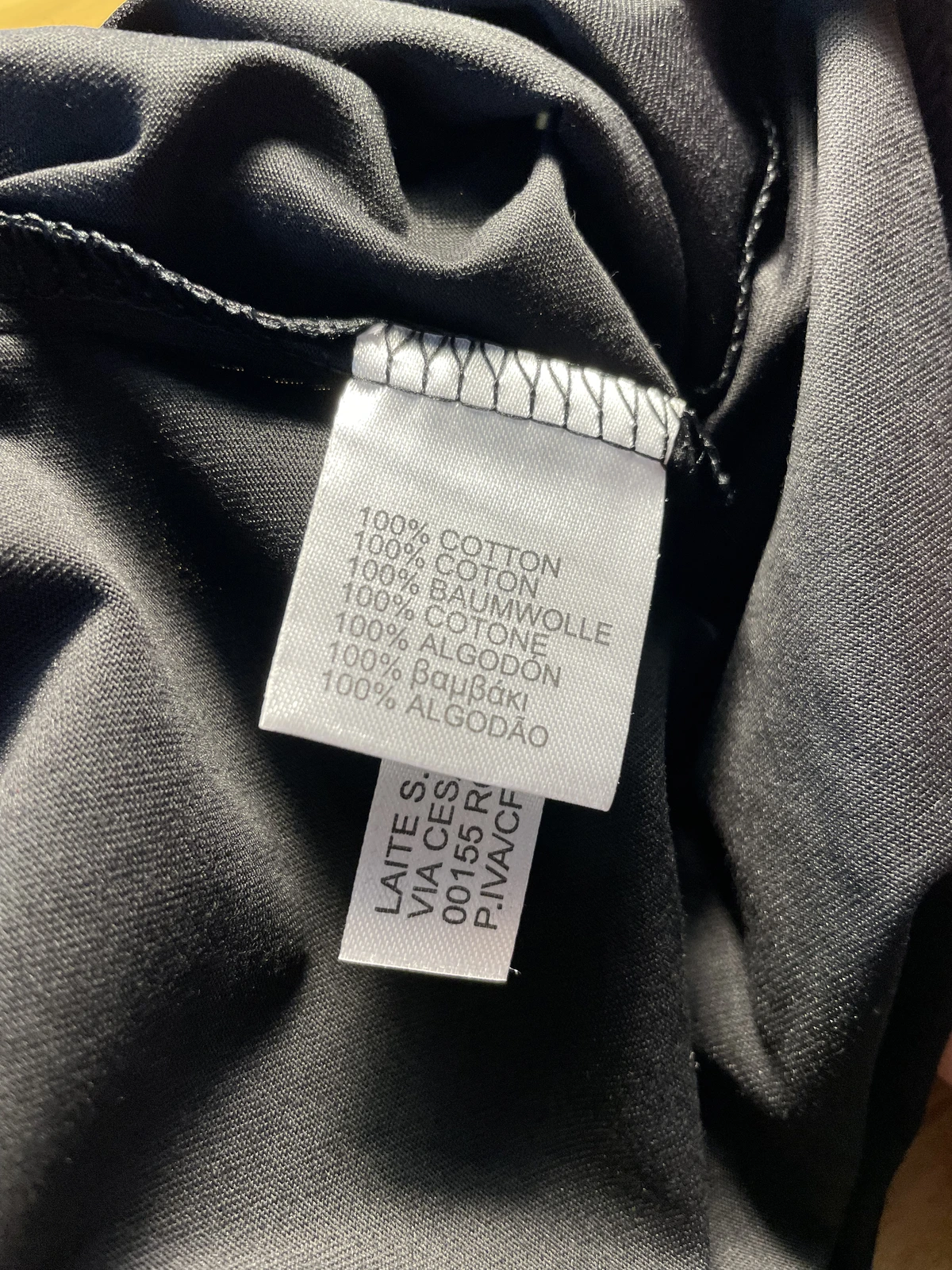
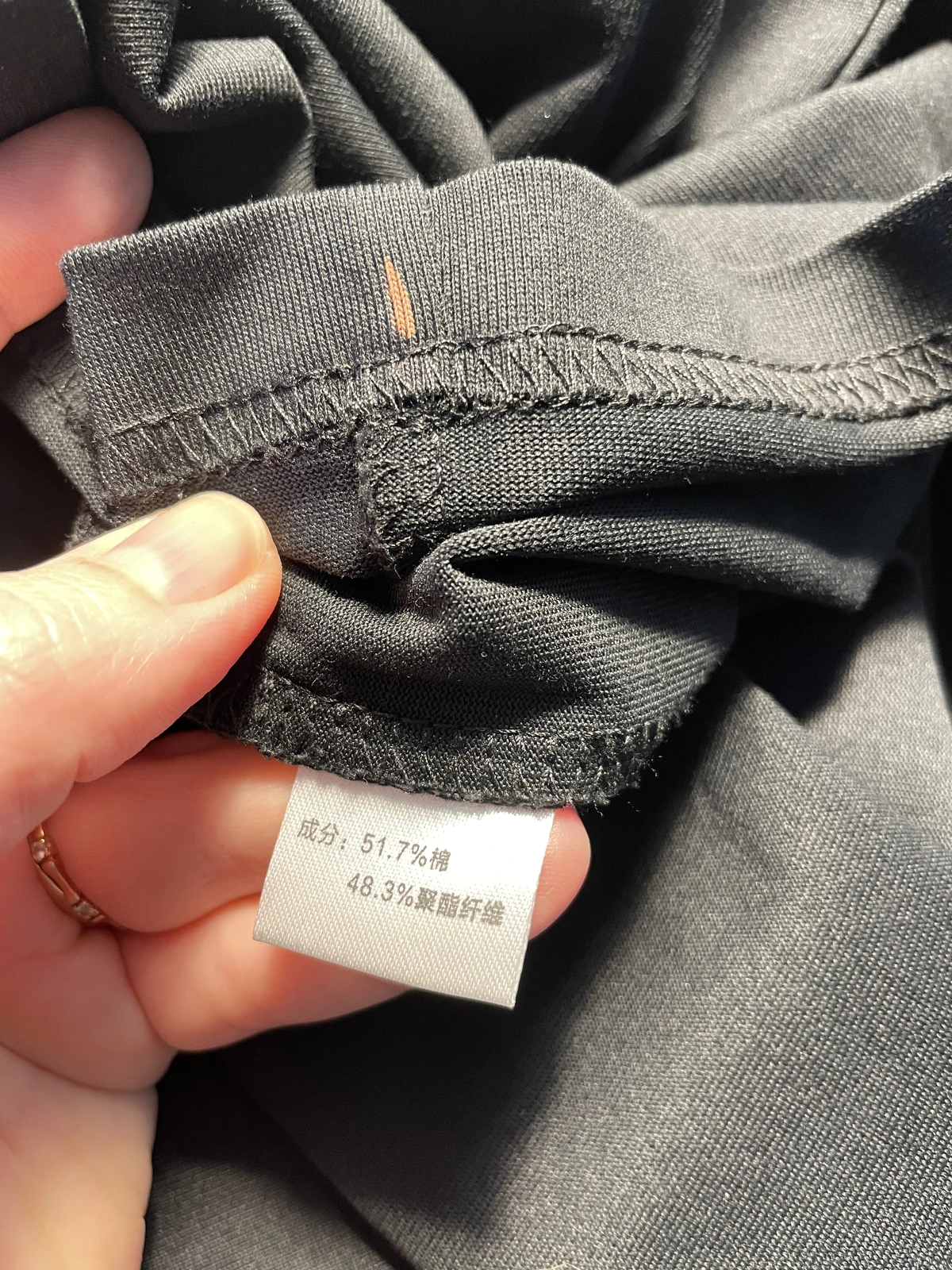
51% cotton / 49% polyester shirt
I tested a shirt labeled around 51% cotton and 49% polyester. Even with almost half polyester, the result was excellent. The fabric felt pleasant, the reaction was visible, and the finished bleach art design looked clean.
This is why I do not automatically reject every blend. If the cotton part reacts well and the fabric surface is smooth, a blend can be very usable for bleach art on clothing.
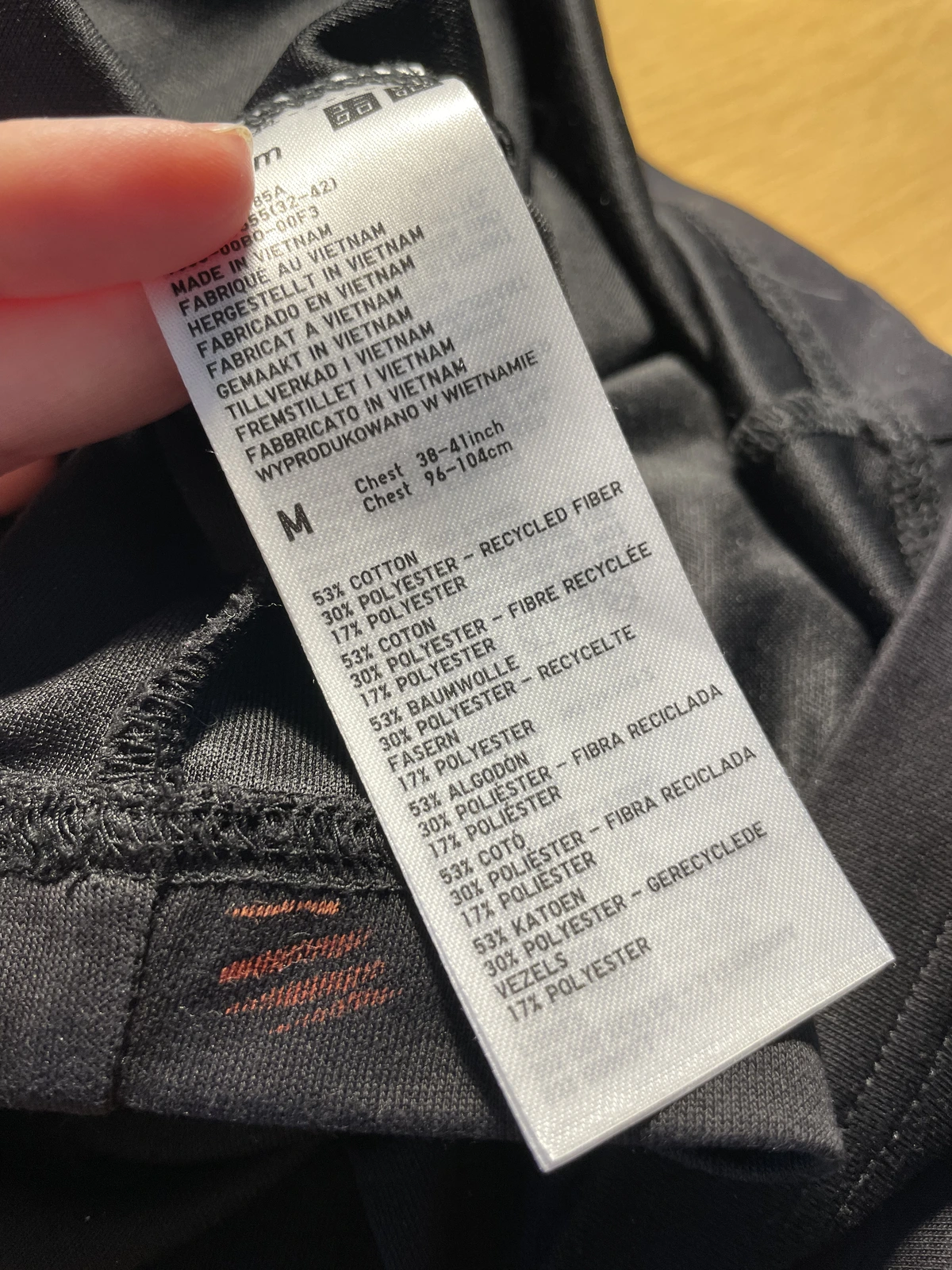
Uniqlo test: cotton with recycled polyester
I also tested a Uniqlo shirt with approximately 53% cotton, 30% recycled polyester and 17% polyester. I made only a small bleach line to check the reaction, and the result was very promising.
For artists, this is useful because many modern shirts are no longer pure cotton. A blend is not automatically bad, but it should always be tested before a large design.
Fabric weight matters: thin shirts can be risky
When choosing a shirt for bleach art, I look at both fabric composition and fabric weight. A thin shirt may bleach quickly, but it can also be damaged more easily, especially if you use strong gel bleach, several layers, or work on one area for too long.
| Fabric weight | Bleach art use | My note |
|---|---|---|
| Under 190 gsm | Risky for strong bleach work | Can become weak or damaged with many layers. |
| Around 240 gsm | Best practical choice | My favorite balance for detailed bleach art shirts. |
| 270 gsm and higher | Can work well | Check surface texture; fuzzy cotton is harder for detail. |
Best hoodie fabric for bleach art
Hoodies can be excellent for bleach art because the fabric is usually thicker than a T-shirt. But hoodie fabric is also more complex: fleece, brushed inside layers, cotton-poly blends and factory treatments can all affect the bleach reaction.
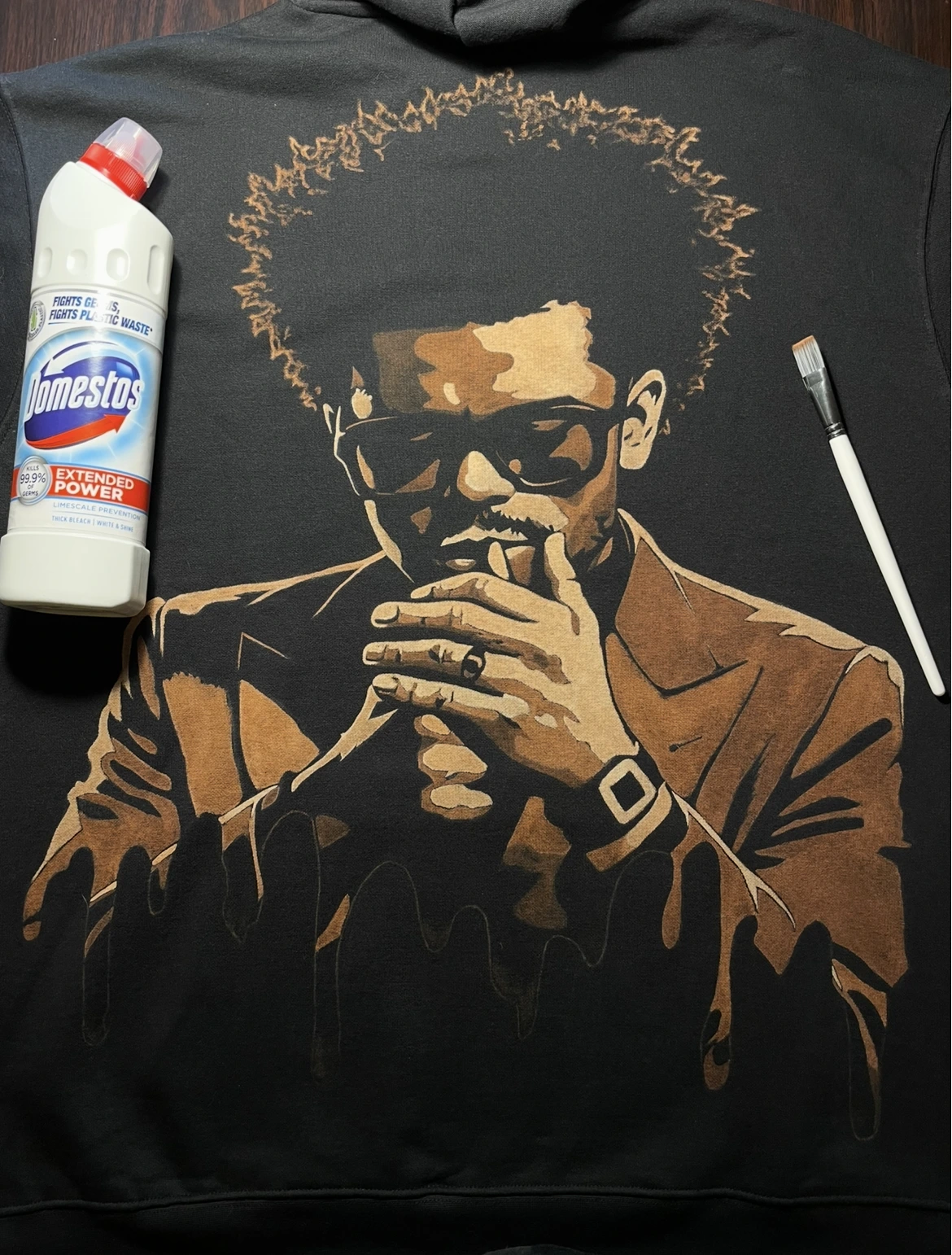
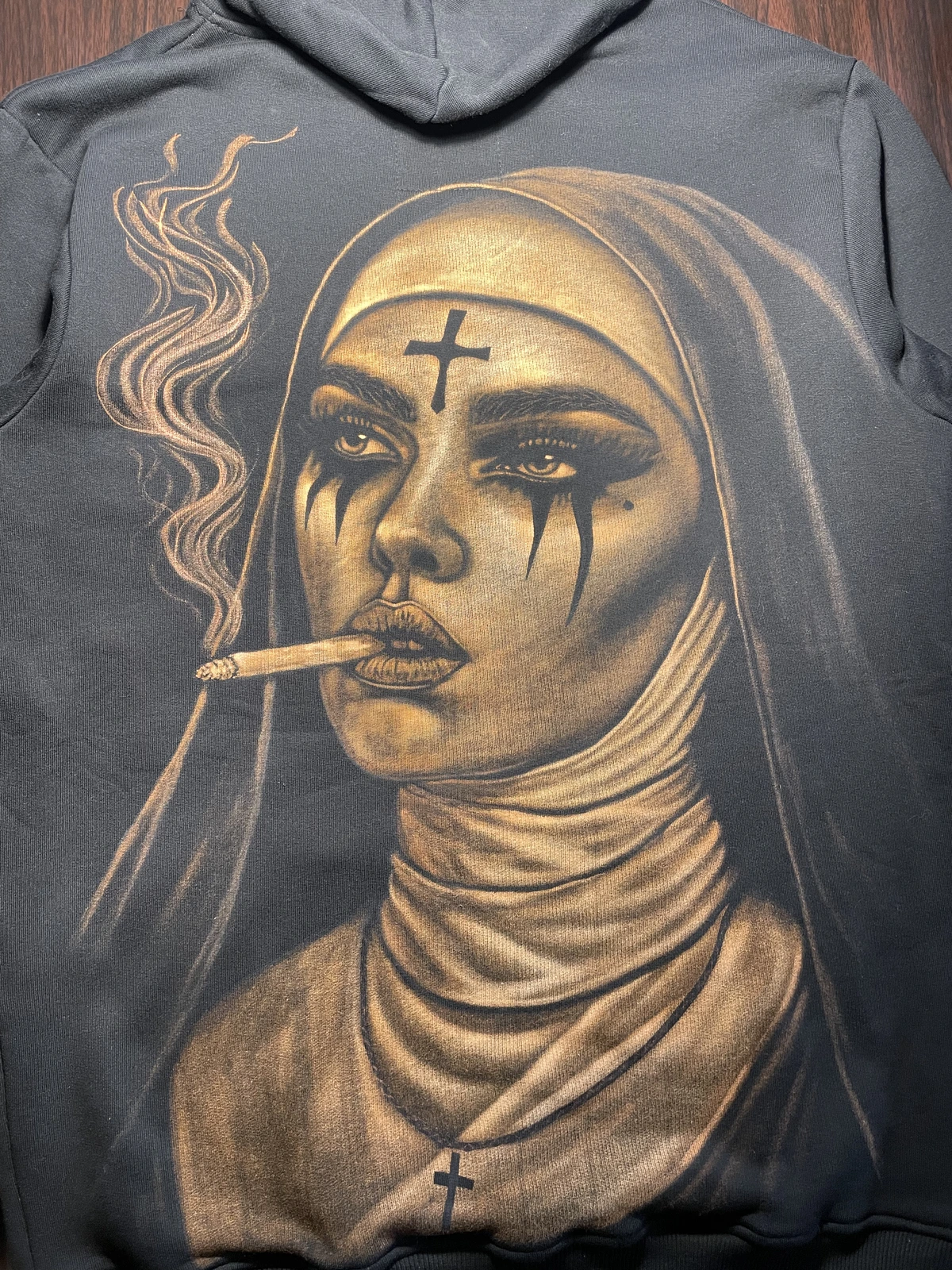
80% cotton / 20% polyester
Most of my hoodie work is made on 80 cotton / 20 polyester. For me, this blend gives a strong result, good fabric quality and a stable surface for detailed bleach art.
100% cotton fleece
I also tested 100% cotton hoodies with a small fleece layer inside. The result was excellent, and the fabric reacted well enough for strong handmade designs.
Difficult 100% cotton hoodie
One premium 100% cotton hoodie looked perfect on the label, but bleach barely worked. It needed 3–5 layers of undiluted bleach and turned mostly white-grey, which made fine details difficult.
Cotton bags
Can you make bleach art on cotton tote bags?
Yes, black cotton tote bags can work for bleach art, but they behave differently from shirts. The cotton shopper bags I tested were very dense, around 600 gsm, so they needed strong bleach and several layers in the same area.
The result on dense cotton bags can go more white than orange. This makes tote bags interesting for bold graphic designs, high contrast artwork and simple shapes, but they may require more patience than a normal cotton shirt.
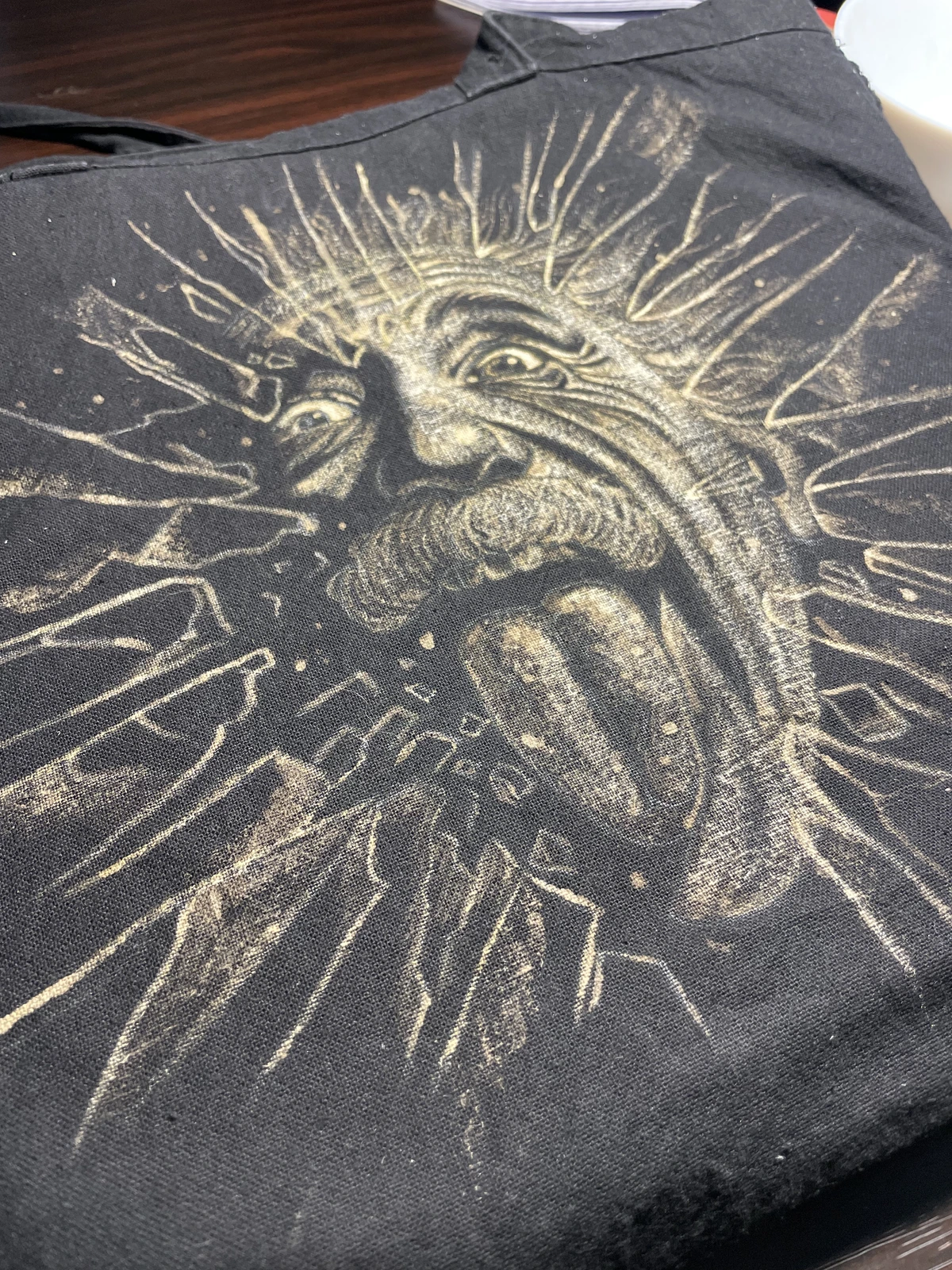
Cotton vs polyester vs blends: bleach art fabric comparison
| Fabric | Bleach reaction | Best use | Artist note |
|---|---|---|---|
| 100% cotton, 240 gsm | Strong and visible | Detailed shirts, portraits, clean designs | My favorite option for bleach art shirts. |
| Thin cotton under 190 gsm | Can react fast | Only light tests or simple work | Risk of fabric damage with strong bleach. |
| Fuzzy 100% cotton | Visible but less clean | Bold designs | Small details are harder to control. |
| 51 cotton / 49 polyester | Can be very good | Shirts, wearable designs | Test first, but do not reject automatically. |
| 80 cotton / 20 polyester hoodie | Strong and stable | Bleach art hoodies | One of my best hoodie options. |
| 100% polyester | Usually weak | Not recommended for strong bleach art | Often barely changes color. |
| 600 gsm cotton tote bag | Slow but strong with layers | Graphic tote bag designs | Needs strong bleach and patience. |
Common mistakes when choosing fabric for bleach painting
Only trusting the label
100% cotton is a good sign, but it does not guarantee the perfect bleach reaction. Always test the exact garment.
Using fabric that is too thin
Thin shirts can be damaged by strong bleach, especially if you add many layers in the same place.
Expecting every black shirt to turn orange
Black fabric can turn orange, yellow, grey, white or beige depending on dye and finish.
Trying detailed work on bad fabric
If the fabric reacts only after 3–5 strong layers, it may be better for bold designs than tiny details.
FAQ: best fabric for bleach art
What fabric is best for bleach painting?
The best fabric for bleach painting is usually dark, smooth, medium-heavy cotton. For shirts, I prefer around 240 gsm. For hoodies, 80% cotton / 20% polyester can work very well.
Does bleach painting work on polyester?
Pure polyester usually gives a weak bleach reaction or almost no visible change. Some cotton-polyester blends can work, but 100% polyester is not reliable for strong bleach art.
Can I bleach 80 cotton 20 polyester?
Yes, 80% cotton / 20% polyester can be a very good fabric for bleach art, especially for hoodies. Still, test first because dye and fabric finish can change the result.
Will bleach ruin 100% cotton?
Bleach can weaken cotton if it is too strong, left too long, or applied in too many layers. Thick cotton handles bleach better than very thin cotton, but the garment should still be washed after the reaction.
Why is my bleach not working on fabric?
The fabric may contain polyester, resistant dye, factory treatment, or a finish that slows the bleach reaction. Sometimes even 100% cotton needs several layers or gives a grey-white result instead of orange.
Can you wash bleach art clothes?
Yes. After bleach painting, the garment should be rinsed and washed before regular wear. For care instructions, read How to Wash Bleach Art Clothing .
Want handmade bleach art on fabric that actually works?
At HandPaintedCloth, each shirt, hoodie and fabric piece is tested and painted by hand. The fabric is part of the artwork: contrast, texture, weight and bleach reaction all matter.
Related bleach art guides
Learn more about bleach art on clothing, fabric safety, washing, design ideas and handmade custom pieces.
Bleach Hoodie Designs
Explore handmade bleach hoodie designs, fabric ideas, dark aesthetic artwork and custom bleach art inspiration.
IdeasBleach Designs on Fabric
Design inspiration for shirts, hoodies, fabric pieces and handmade bleach art.
Pillar GuideBleach Art on Clothing: Complete Guide
A complete guide to bleach art materials, process, fabric choice and results.
SafetyHow to Neutralize Bleach Painting
What to do after bleach drawing on clothes and how to rinse the fabric properly.