
How to Bleach a Design on a Shirt: DIY Guide for Clean Bleach Shirt Designs
Learning how to bleach a design on a shirt is different from making random bleach splashes. A good bleach shirt design needs planning, fabric testing, a clean outline, controlled bleach application, and patience while the color develops. This guide shows how to create an intentional design on a black shirt using chalk, stencils, brushes, cardboard, and safe DIY bleach shirt techniques.
Quick navigation
How to Bleach a Design on a Shirt: Jump to the Main Sections
What does it mean to bleach a design on a shirt?
To bleach a design on a shirt means to use bleach in a controlled way to create a visible image, symbol, pattern, or artwork on dyed fabric. Instead of adding ink, vinyl, or paint, bleach removes or changes part of the original dye. On black cotton, this often creates orange, copper, beige, grey, or pale cream tones.
This is why a bleach design shirt can feel different from a printed shirt. The design is not a thick layer sitting on top of the fabric. The color change happens inside the textile. If the fabric reacts well and the bleach is controlled properly, the finished shirt can stay soft, flexible, and wearable.
The important word is design. A bleach design is not just a random splash. It usually starts with an idea, a layout, a chalk outline, a stencil, or a simple sketch. The goal is to make the shirt look intentional, not like an accident.
If you need a broader beginner introduction before making a controlled design, start with the full beginner guide to making bleach art on a shirt . This article focuses more specifically on creating a clean, planned shirt design.
Best shirt for bleach designs
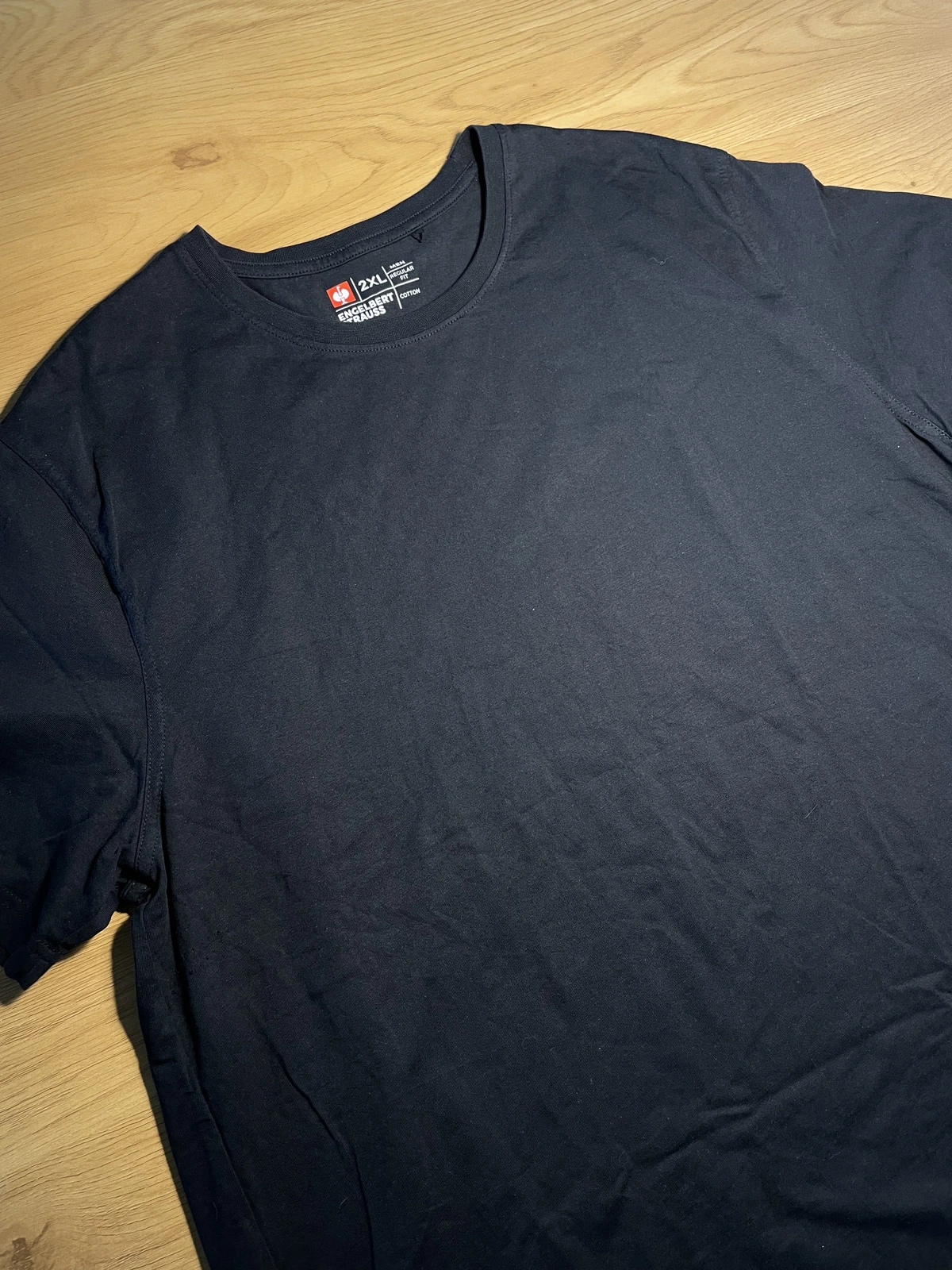
The best shirt for bleach designs is usually a black or very dark cotton shirt. Cotton reacts more clearly than many synthetic fabrics, which makes it easier to create visible lines, shadows, highlights, and detailed bleach painting effects.
A cotton-rich shirt is also easier to control. If the fabric contains too much polyester, the bleach reaction may be weak, uneven, or almost invisible. Some blended shirts react only in certain threads, which can make the design look patchy instead of intentional.
Black shirts are especially popular because the contrast is strong. A bleach design on a black shirt can look bold even with a simple shape. Dark navy, charcoal, deep brown, and dark green can also work, but every shirt should be tested first.
For a deeper comparison of fabric reactions, read the guide about the best fabrics for bleach art, including cotton vs polyester .
Tools for making bleach shirt designs
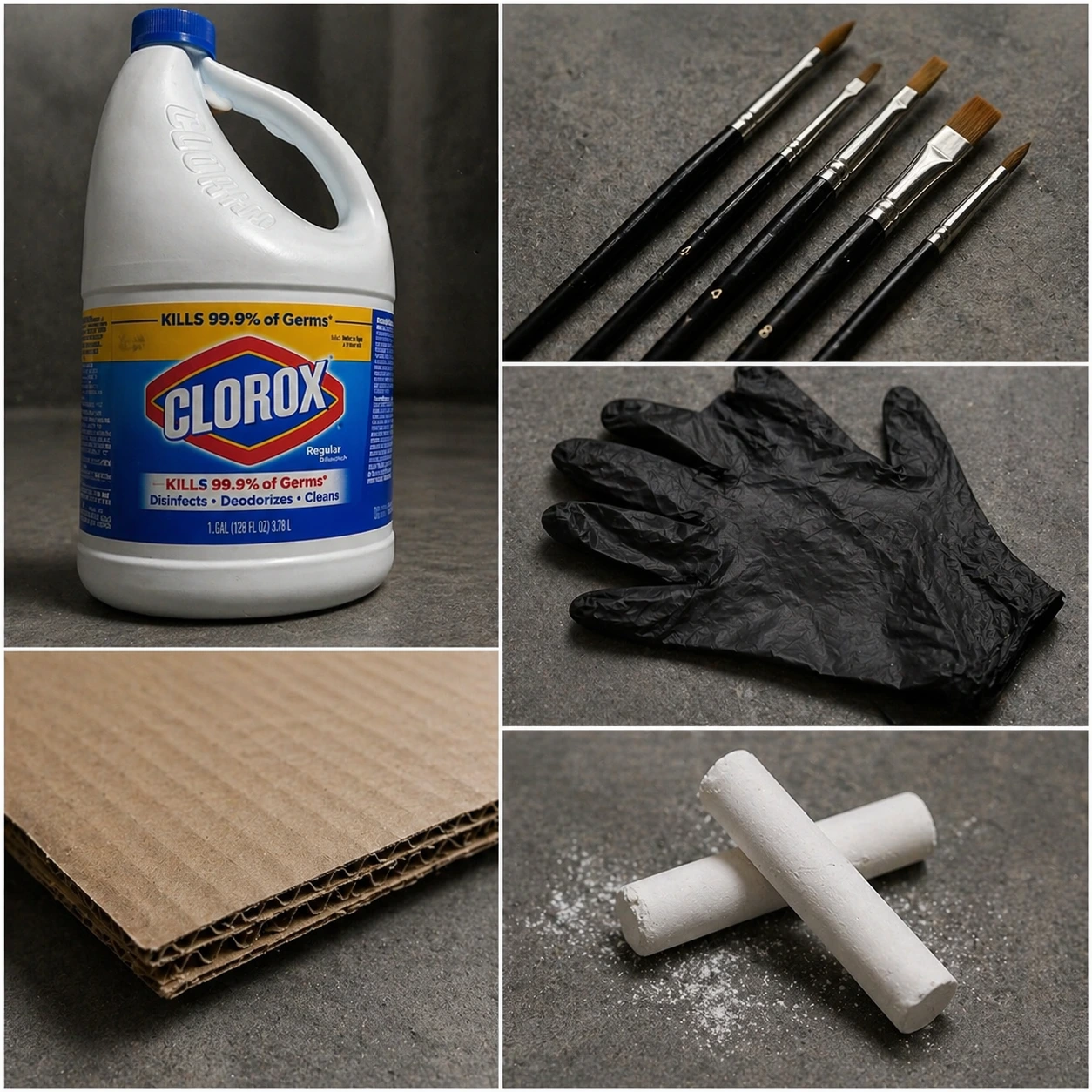
A clean DIY bleach shirt does not require expensive equipment, but it does require control. For a planned bleach design shirt, brushes and chalk are usually more useful than a random spray bottle. The more detailed the design is, the more important your tools become.
- Black cotton or cotton-rich shirt.
- Household bleach or carefully diluted bleach solution.
- Gloves, ventilation, and old clothes for protection.
- Cardboard or plastic sheet inside the shirt.
- Chalk or washable pencil for sketching the design.
- Small brushes for lines, edges, and details.
- Stencil, freezer paper, or printed template if you want a cleaner shape.
- Cotton swabs or sponge pieces for small highlights and texture.
- Water for rinsing and stopping the reaction.
For detailed bleach shirt designs, a brush gives much more control than pouring or spraying. A spray bottle can be useful for backgrounds, galaxy effects, distressed textures, or bleach dye shirt looks, but it is not the best tool for clean edges or precise artwork.
Work slowly and safely. Bleach can damage skin, eyes, furniture, and fabric if handled carelessly. Keep the area ventilated, protect your hands, and do not mix bleach with other household chemicals.
How to bleach a design on a shirt step by step
The safest way to bleach a design on a shirt is to build the artwork gradually. Do not start with the brightest highlights or the wettest brush. Begin with the main shape, test the reaction, and add stronger marks only after you understand how the fabric behaves.
1. Choose a simple design first
For your first bleach design shirt, choose a shape that is readable without tiny details. A moon, skull, flame, simple face, symbol, text, wing, flower, or abstract shape is easier to control than a detailed portrait. The design should still look good if some edges become softer than planned.
2. Wash and dry the shirt before starting
A new shirt may contain finishing chemicals, dust, or factory residue. Washing it first helps the fabric react more evenly. Make sure the shirt is fully dry before drawing the outline.
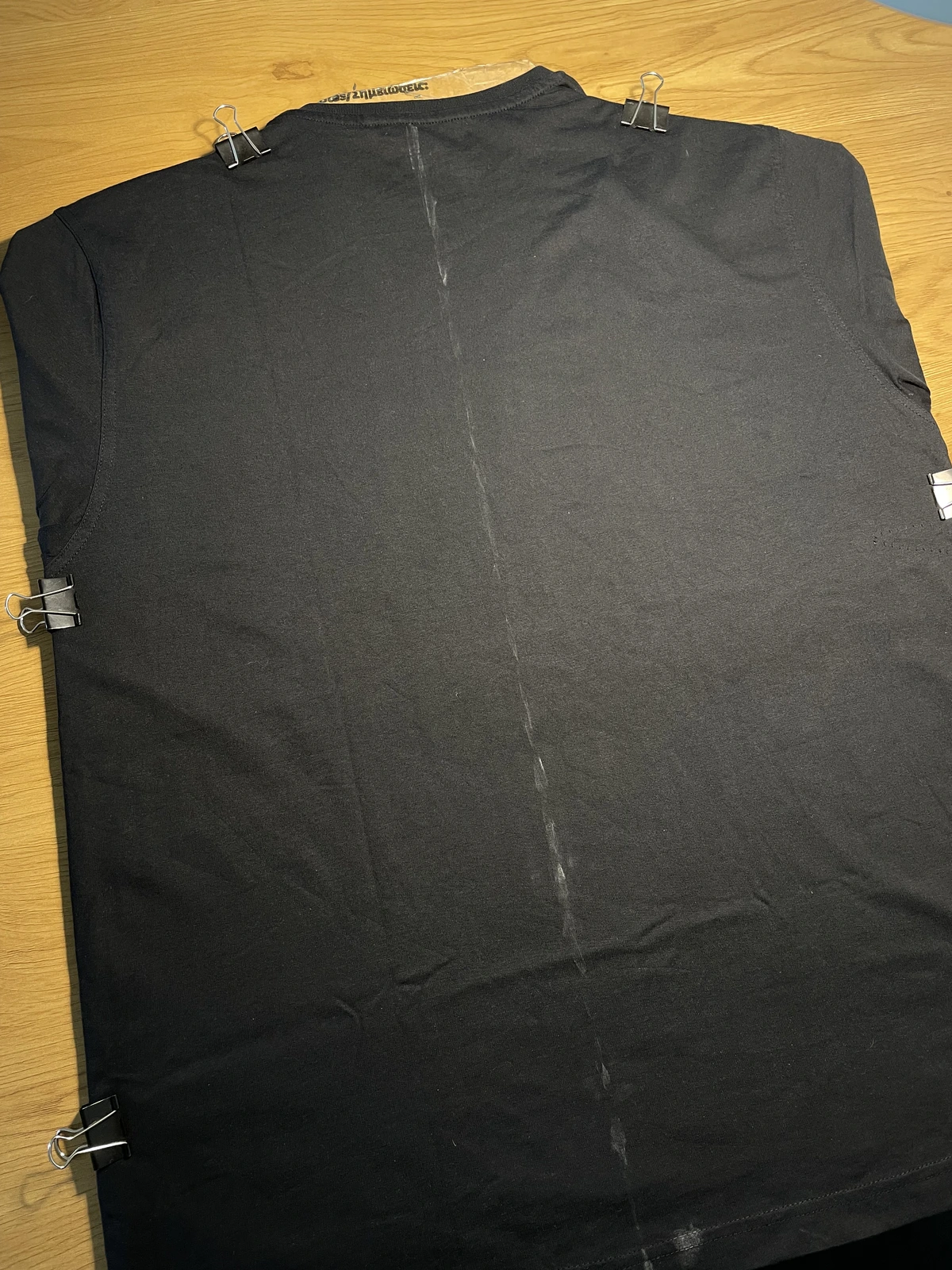
3. Put cardboard inside the shirt
Place cardboard inside the shirt before applying bleach. This prevents the bleach from soaking through to the back and keeps the fabric flatter. For a larger design, use a piece of cardboard that covers the full working area.
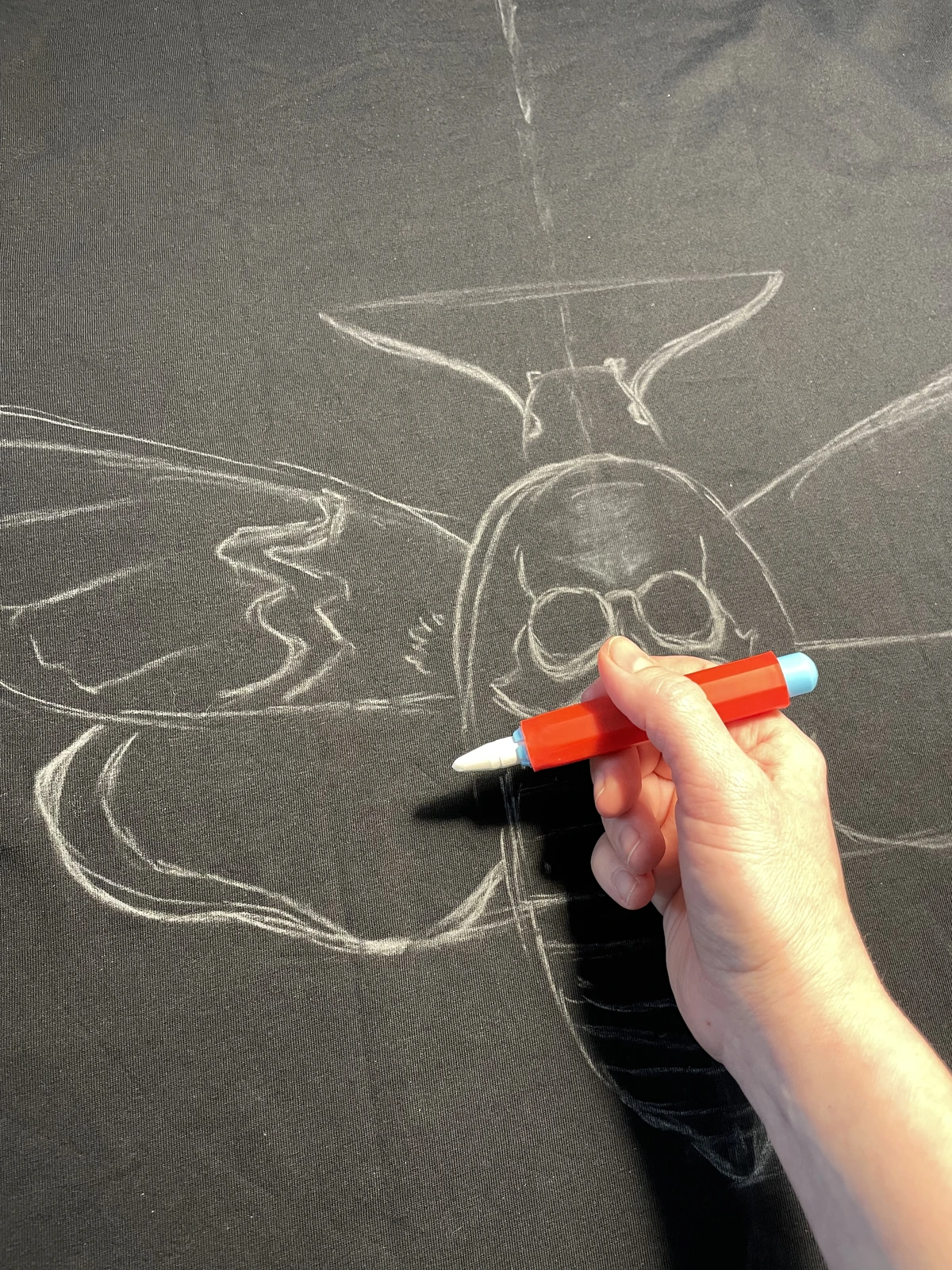
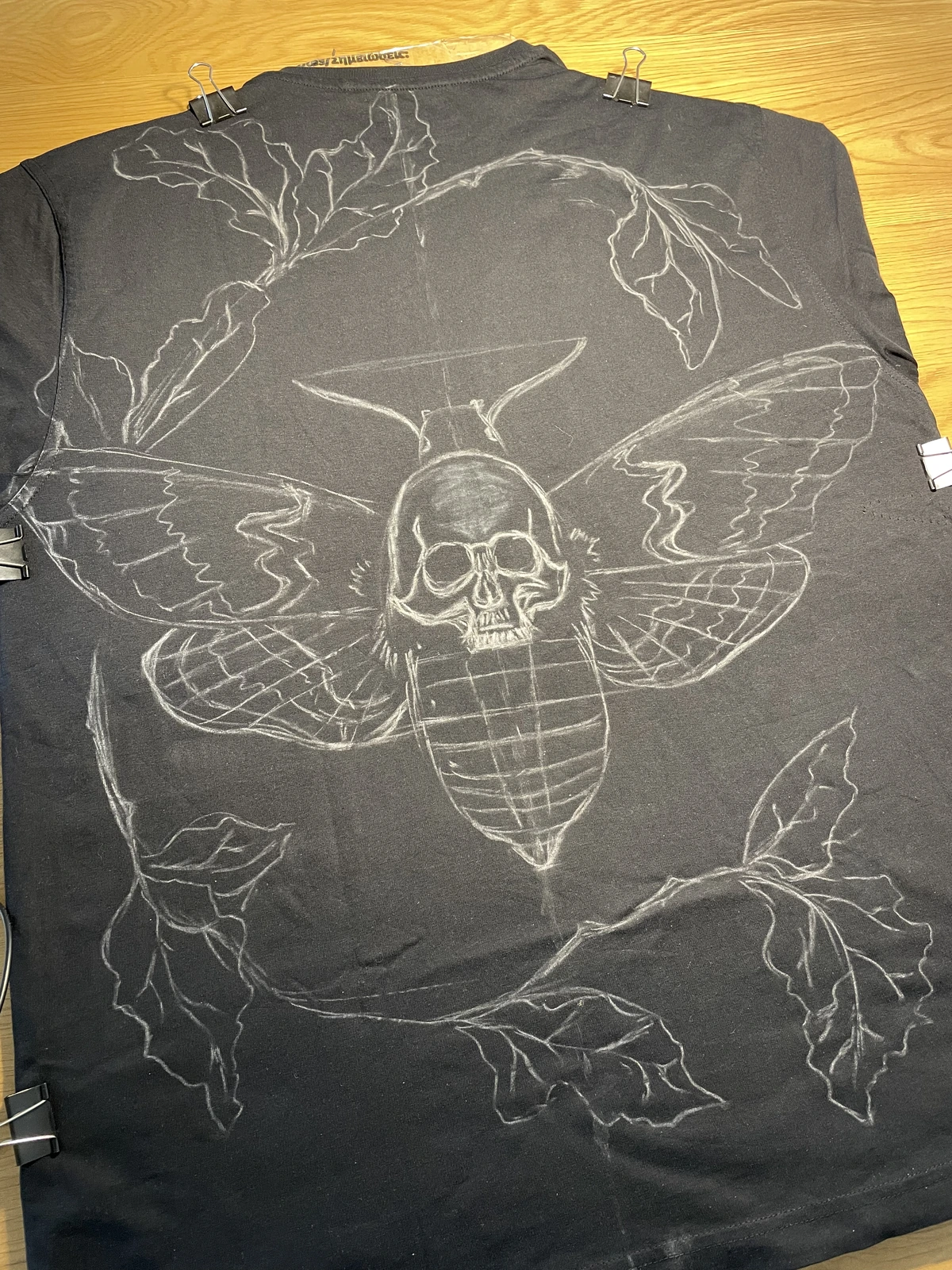
4. Sketch the design with chalk
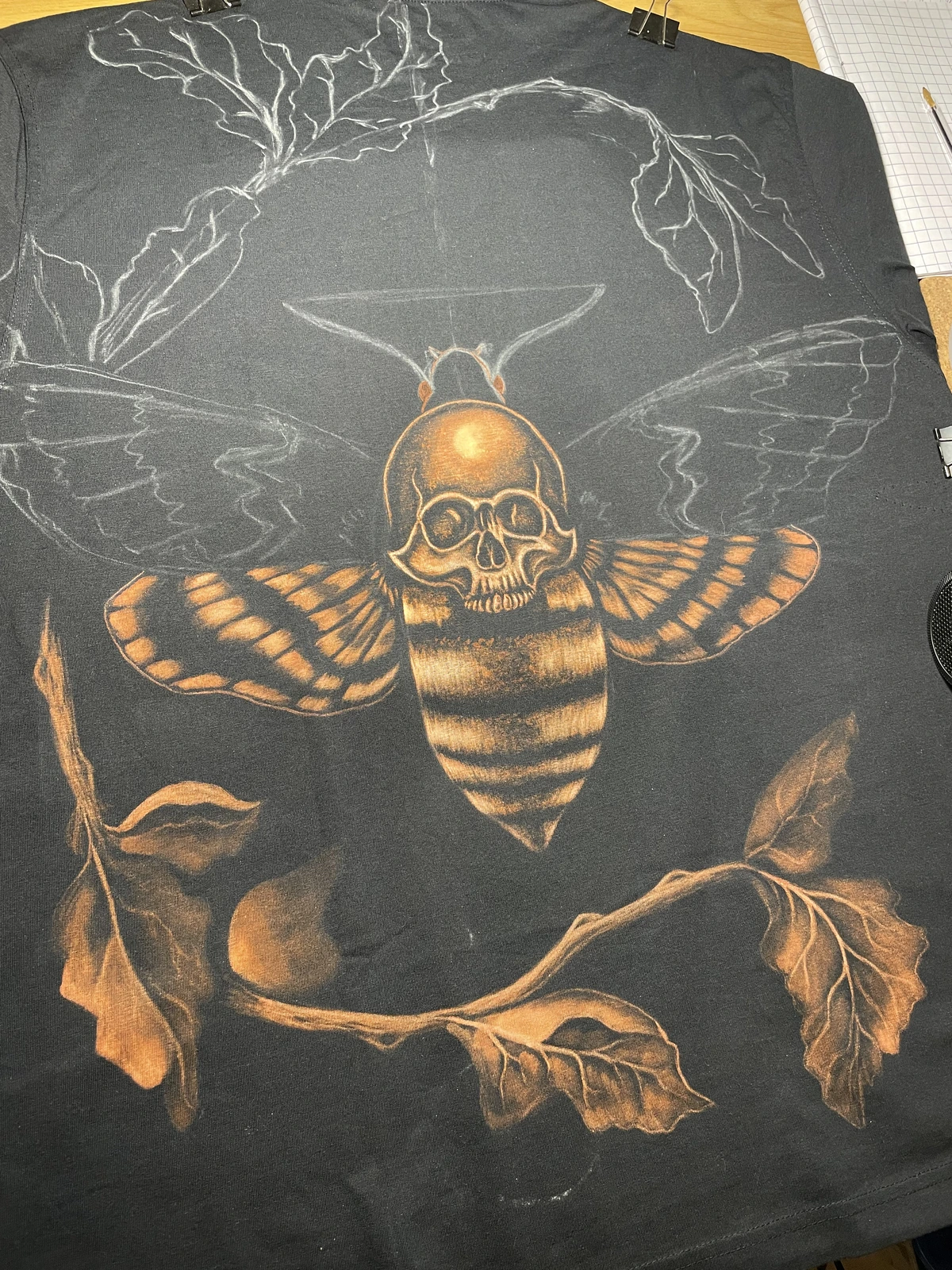
Use chalk or a washable fabric pencil to mark the main outline. Do not draw every tiny detail at once. Start with the main shape, placement, size, and balance. A clear sketch makes the bleach painting shirt process much easier.
5. Use a stencil if you want sharper edges
A stencil can help with logos, symbols, simple lettering, stars, moons, or geometric shapes. Press it flat so bleach does not creep underneath. For handmade artwork, you can combine stencil edges with freehand brush details.
6. Apply bleach with a small brush
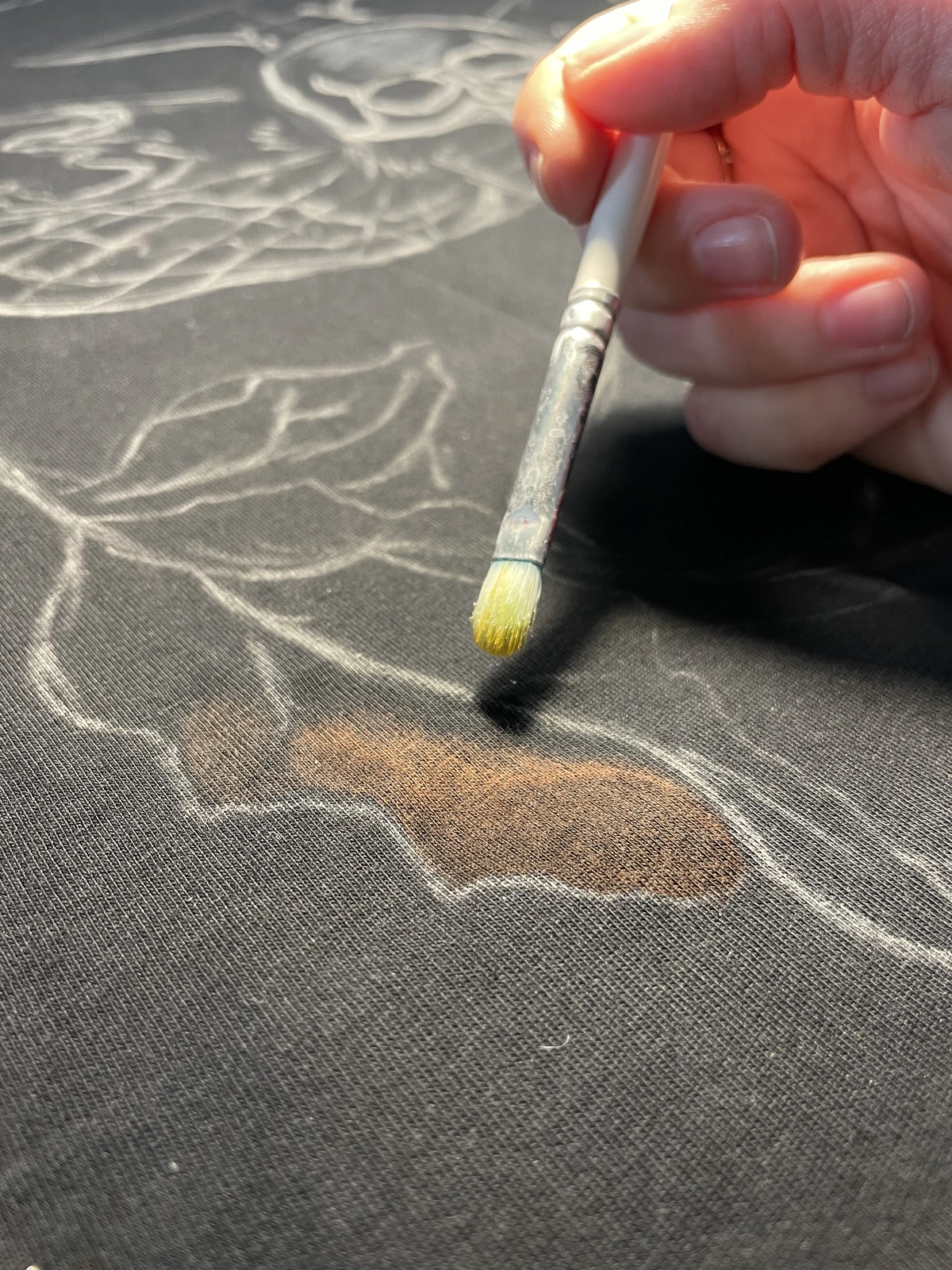
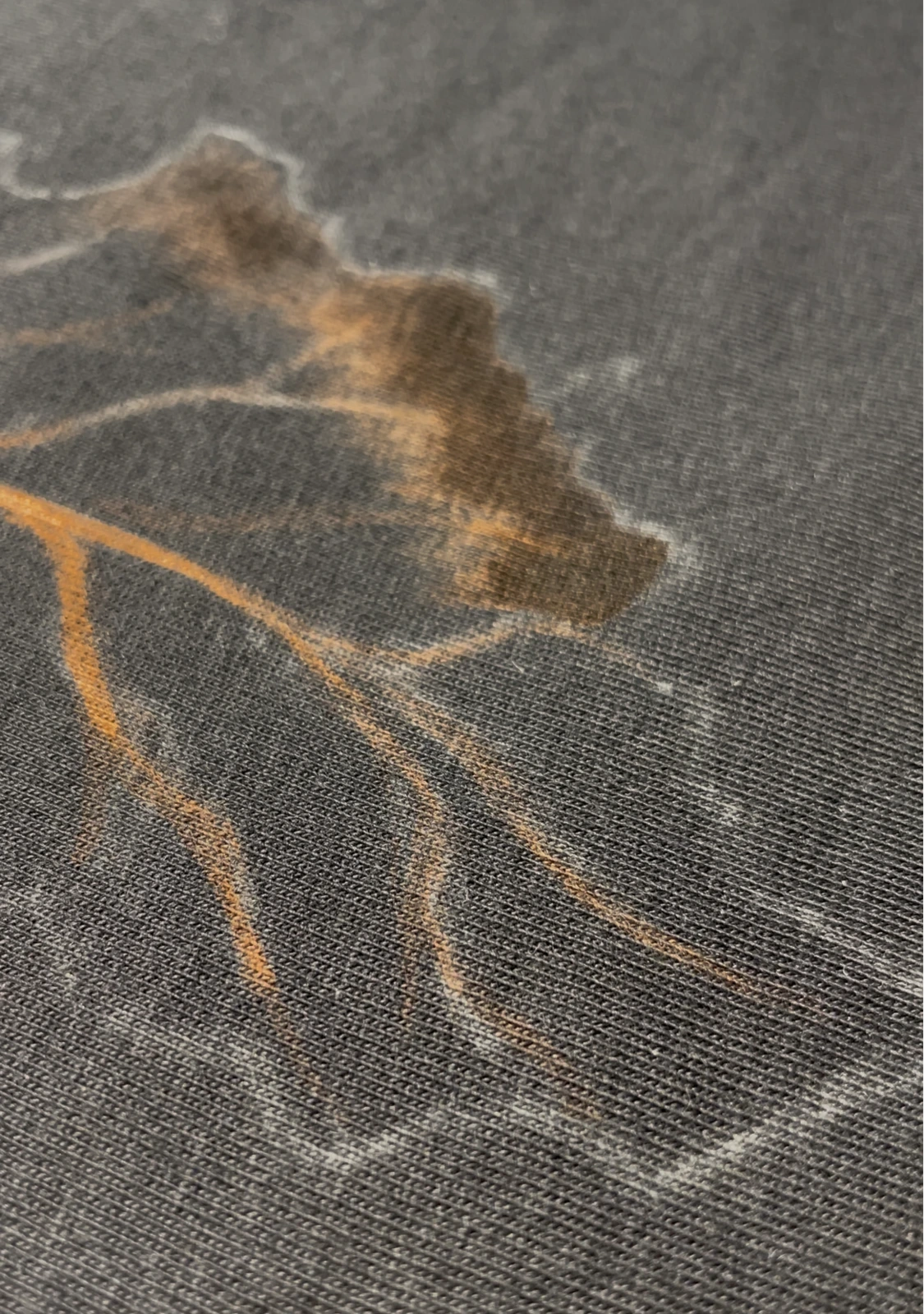
Dip the brush lightly. It should be damp, not dripping. Start with the main lines and use small strokes. Too much bleach can spread beyond the outline, blur the design, or weaken the fabric.
7. Let the color develop
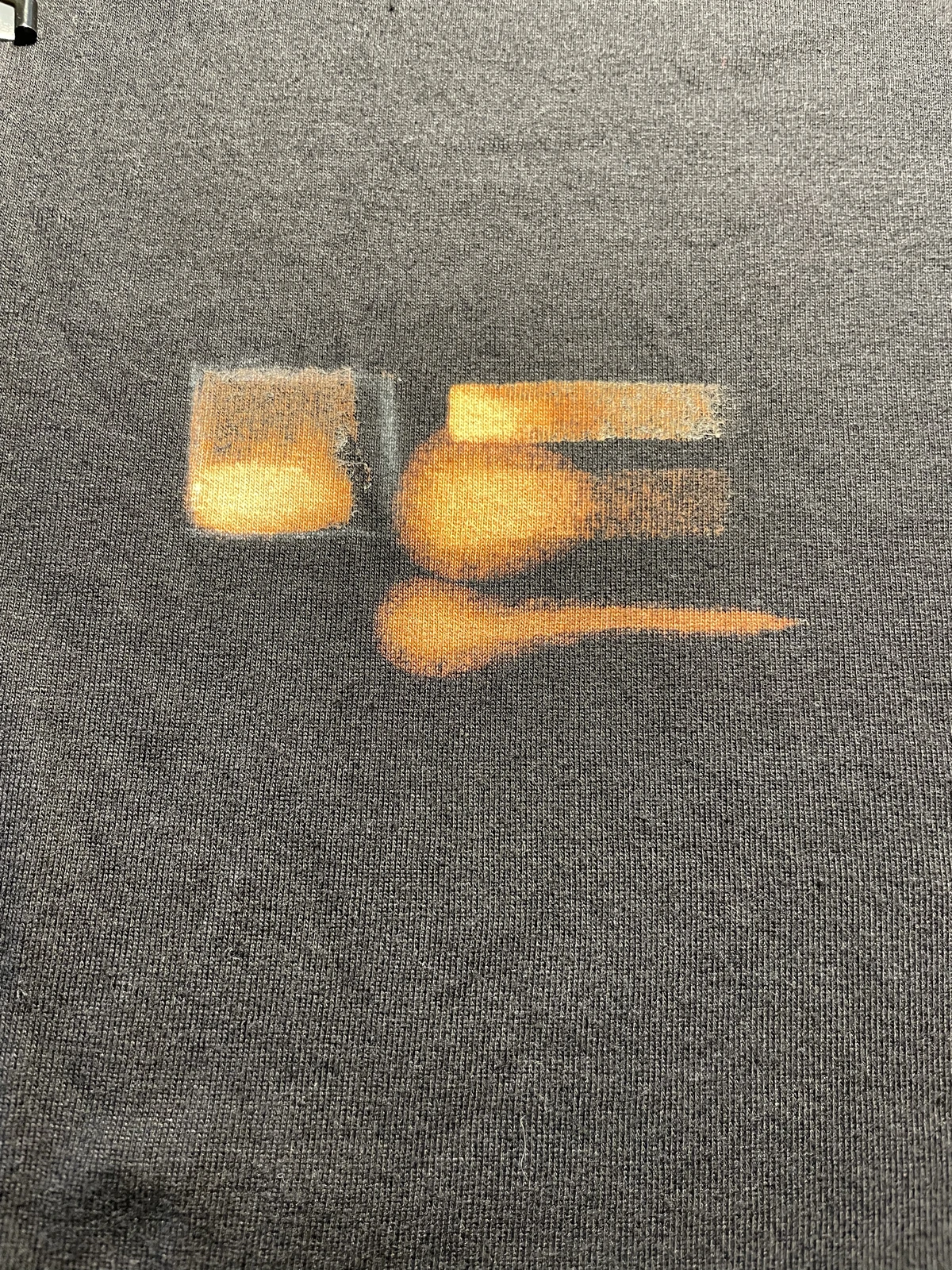
The color may appear slowly. On black cotton, bleach often develops through warm orange, copper, beige, or pale tones. Watch the reaction instead of adding more bleach immediately.
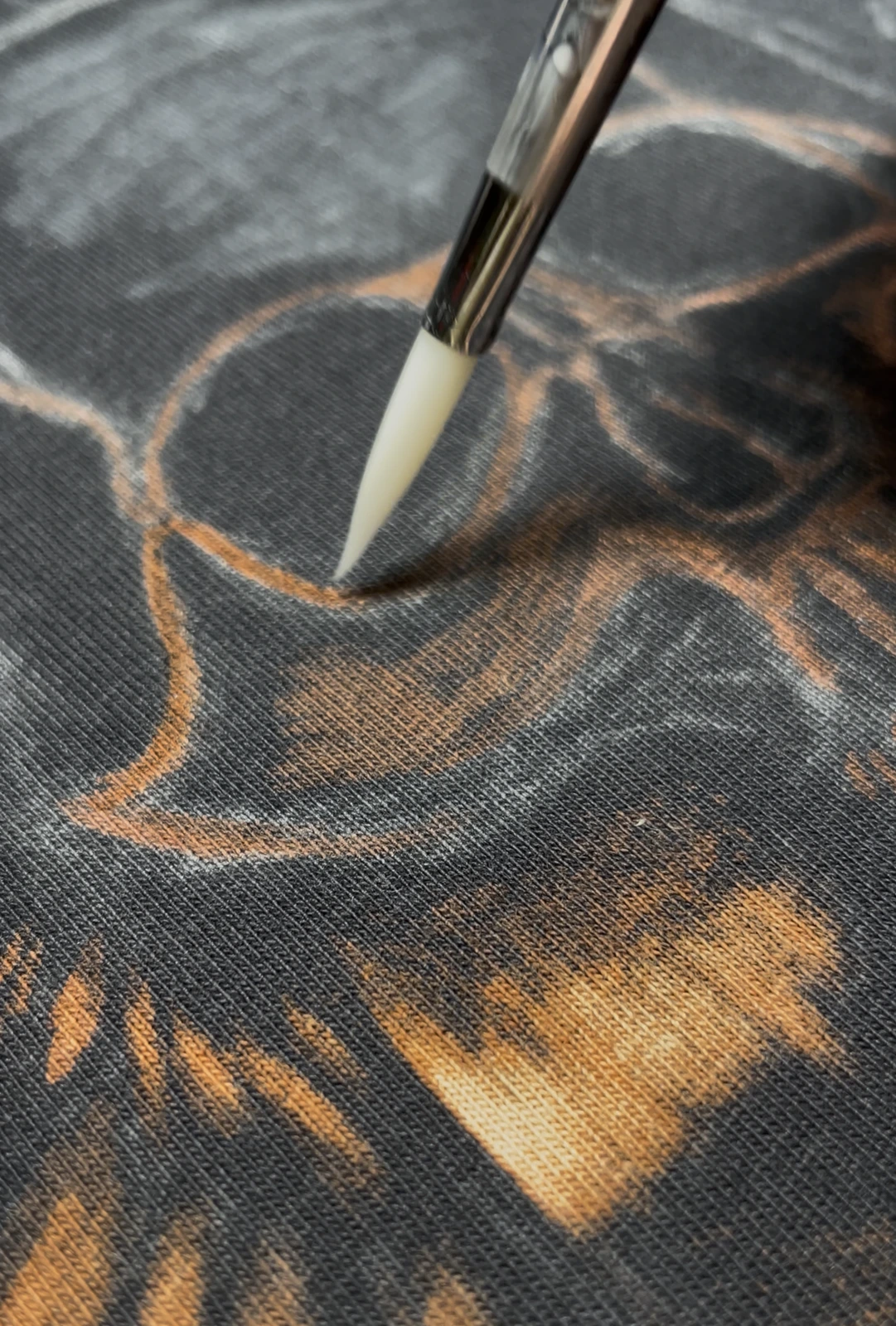
8. Add highlights and details in layers
Once the first layer is visible, add brighter accents only where needed. Layering gives more control than flooding the shirt. This is how simple bleach shirt designs can start looking more intentional and artistic.
9. Rinse and wash the shirt
When the design reaches the color you want, rinse the shirt thoroughly and wash it before wearing. For aftercare, read the full guide on how to wash bleach art clothing safely .
How to keep bleach shirt designs clean and controlled
Clean bleach shirt designs depend on control. The fabric will always absorb liquid a little, so the goal is not to fight the textile completely. The goal is to understand how much bleach your brush holds, how fast the shirt reacts, and how wide each mark becomes after a few seconds.
If you want sharp edges, use less bleach, a smaller brush, and slower strokes. If you want smoke, glow, distressed texture, or a softer bleach dye shirt effect, you can use more movement, sponge work, or very light spray. Both styles can look good, but they should be intentional.
- Keep the brush damp, not dripping.
- Test the bleach reaction on a hidden area or fabric scrap first.
- Use chalk lines as guides, not as final artwork.
- Start with thin marks and build brighter areas gradually.
- Do not overload corners, small details, or narrow lettering.
- Keep cardboard inside the shirt until the design is rinsed.
- Let each area develop before adding more bleach.
For controlled artwork, think in layers: outline, mid-tones, highlights, then texture. This is closer to painting than tie-dye. You are not only changing the shirt color; you are building contrast so the design can be read from a distance.
Common mistakes when bleaching a design on a shirt
Most failed bleach shirt designs happen because too much bleach is used too quickly. Bleach spreads through fabric fibers, so a line that looks perfect at first can become wider after a short time. This is normal, but it needs to be planned for.
- Using a dripping brush instead of a lightly loaded brush.
- Skipping the fabric test before making the full design.
- Choosing a shirt with too much polyester or resistant dye.
- Trying to create tiny details before learning how the fabric reacts.
- Leaving bleach on the shirt longer than needed.
- Forgetting cardboard and letting bleach soak through to the back.
- Using a stencil without pressing the edges flat.
- Washing the shirt too harshly after the design is finished.
If your first DIY bleach shirt does not look perfect, it does not mean the technique failed. It usually means the shirt, bleach strength, and application method need adjustment. Even experienced artists test fabric first because every black shirt can react differently.
Bleach design shirt vs painted shirt: what is the difference?
A bleach design shirt and a painted shirt can both be handmade, but the result is different. Fabric paint adds pigment on top of the textile. Bleach removes or changes the original dye inside the shirt. That is why bleach art often feels lighter and more integrated into the fabric.
Paint is better when you need exact colors. Bleach is better when you want a raw, faded, burned, vintage, gothic, or high-contrast look on dark fabric. Many bleach shirt designs work because the limited color palette makes the artwork feel dramatic and natural at the same time.
For a full comparison, read Bleach Art vs Fabric Paint: what is the difference and which lasts longer .
Easy bleach shirt design ideas to try first
The best beginner bleach shirt designs are simple enough to control but strong enough to look intentional. You do not need to start with a detailed portrait. A clear silhouette, symbol, or bold shape can look much better than a complicated design that becomes blurry.
Simple symbols
Stars, moons, crosses, hearts, runes, small wings, and graphic symbols are good for learning clean placement.
Gothic shapes
Skulls, candles, statues, thorns, old lettering, and dark ornaments work naturally with the faded bleach effect.
Abstract faces
A simple eye, mouth, mask, or distorted face can look expressive without requiring perfect realism.
Text and lettering
Short words, hand-drawn letters, or stencil text can work well if the lines are thick enough to survive fabric bleeding.
For a broader inspiration list, explore bleach art ideas for T-shirts and hoodies .
Will a bleach design wash out of a shirt?
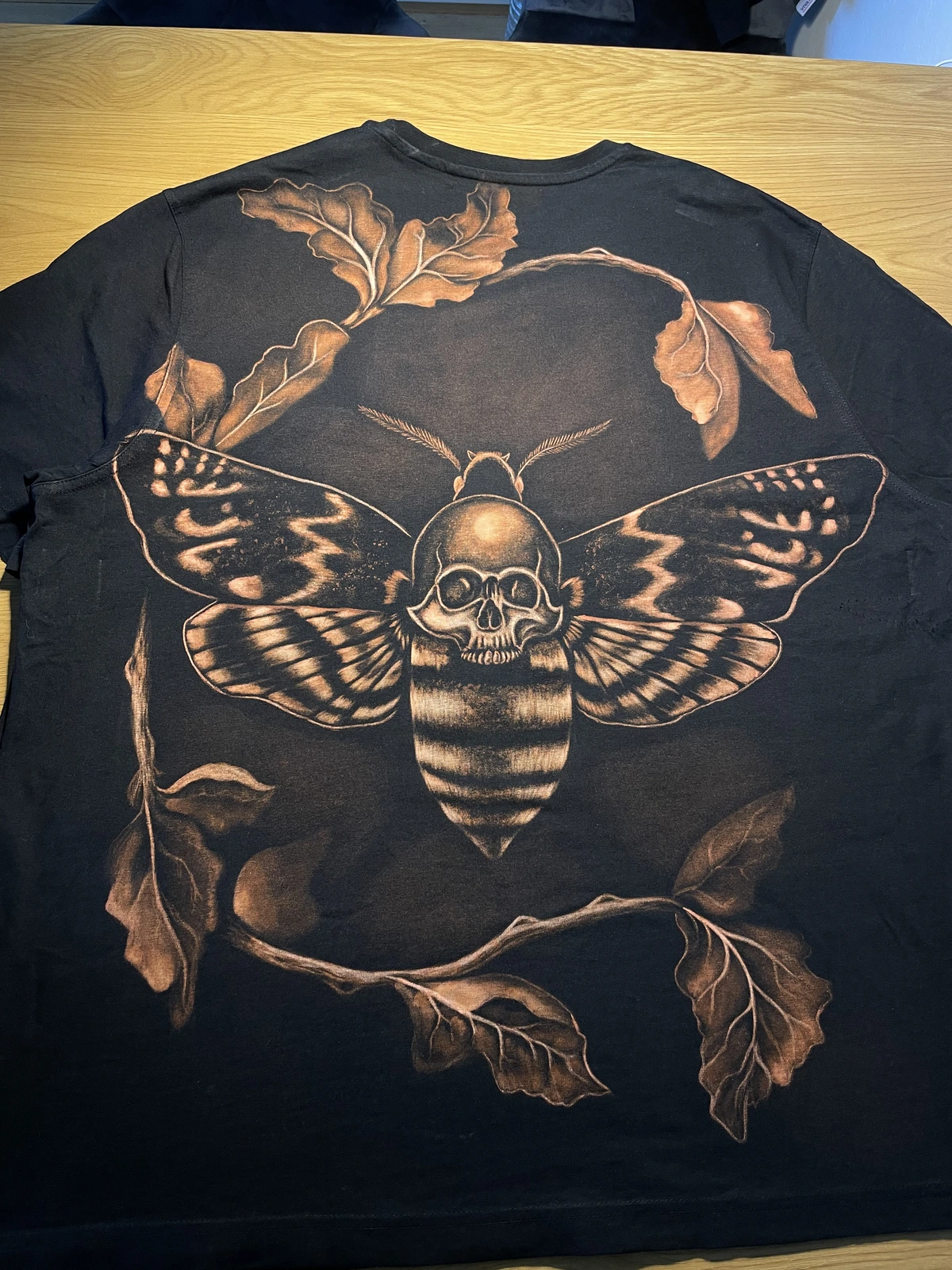
A bleach design usually does not wash out like paint because bleach changes the dye of the fabric. Once the shirt has been rinsed and washed properly, the lightened design is part of the textile. However, the shirt still needs gentle care because bleach can weaken fabric if it is overused.
Wash the shirt inside out, use mild detergent, avoid adding more bleach, and choose cold or lukewarm water. Air drying is gentler than high heat. This helps protect both the design and the fabric itself.
For a detailed durability explanation, read whether bleach art washes out and how long bleach art on clothing lasts .
Video: bleach shirt design process
A short process video is one of the best ways to understand how bleach painting on a shirt works. Photos show the stages, but video shows the timing: how the brush touches the fabric, how the color appears, and how slowly the design is built.
Bleach shirt process
DIY bleach shirt vs handmade bleach art shirt
A DIY bleach shirt is a great way to experiment with fabric, design, and contrast. It is creative, affordable, and useful for learning how bleach reacts on clothing. Simple bleach shirt designs can be made at home with patience and safe handling.
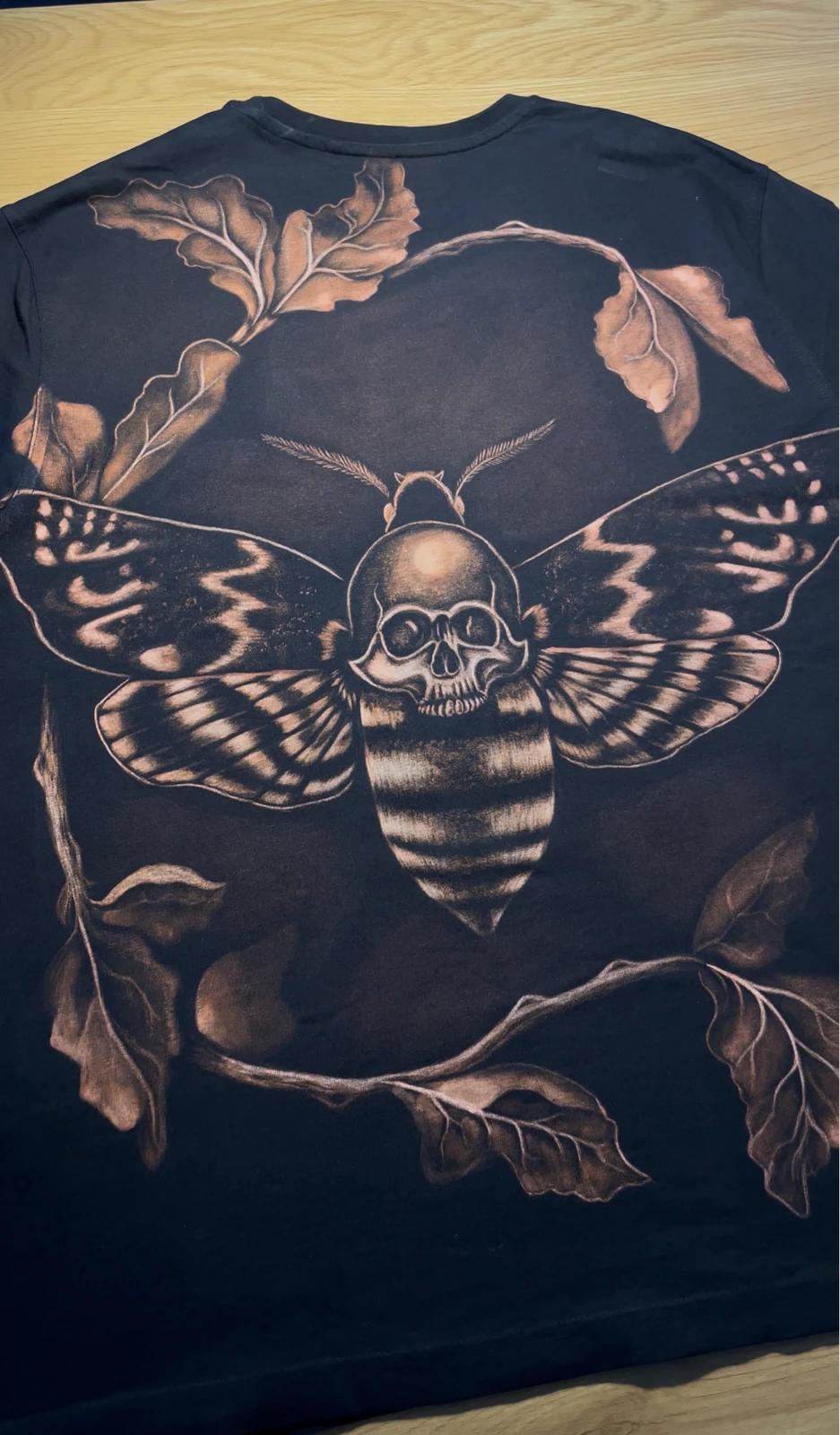
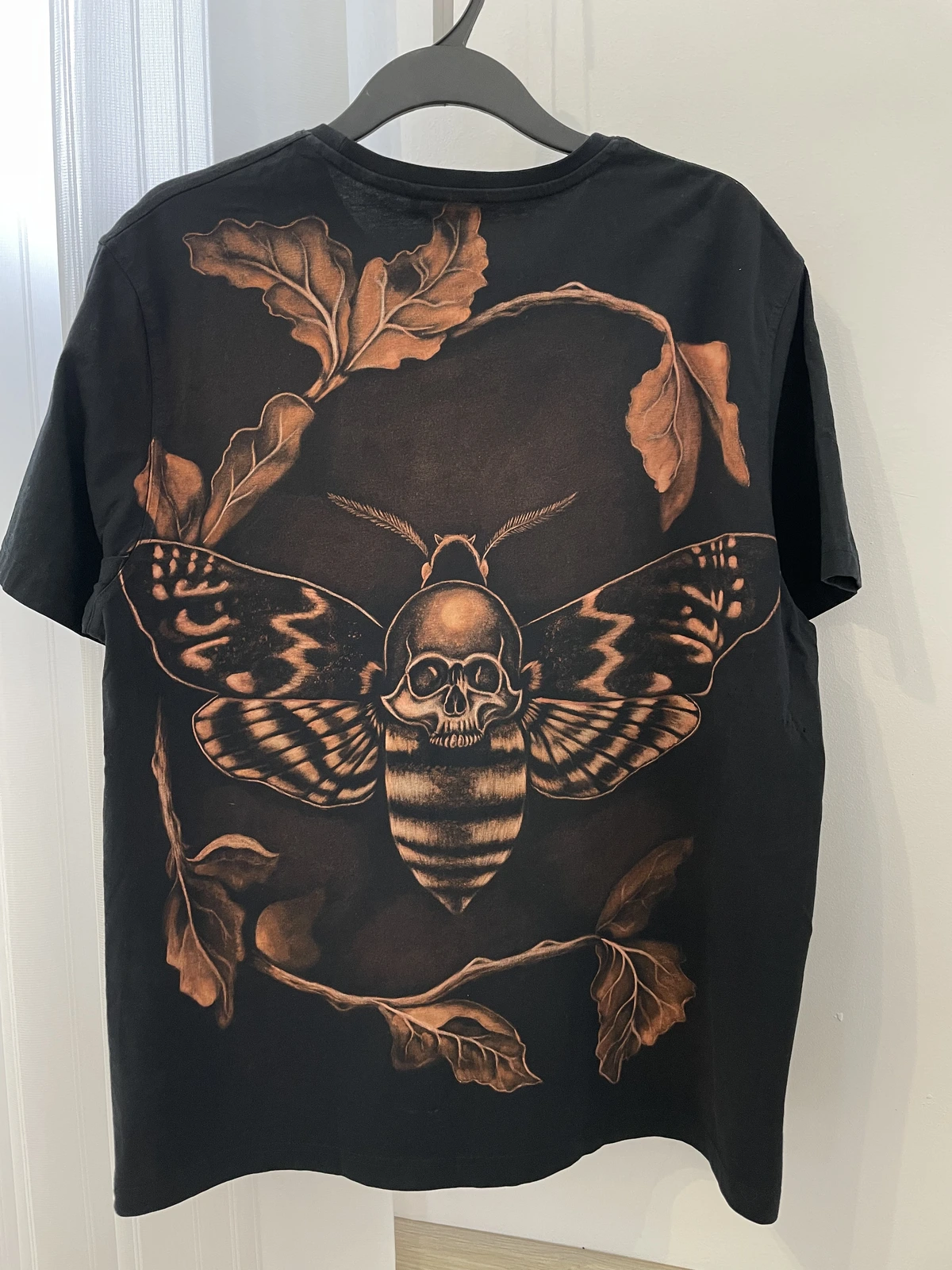
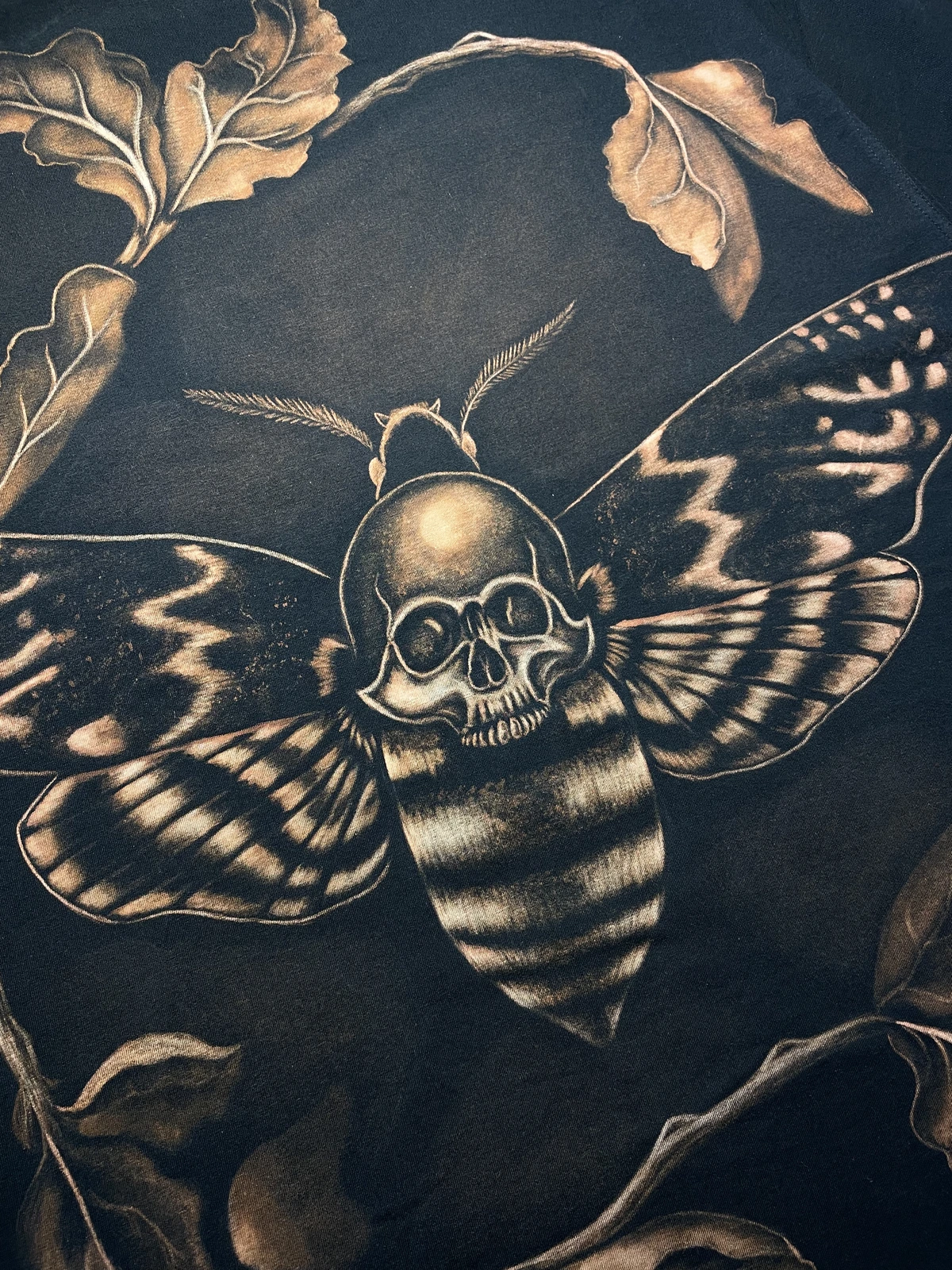
A handmade bleach art shirt is more refined. The artist plans the composition, adapts the idea to the shape of the garment, controls the bleach reaction, builds the contrast in layers, and treats the shirt as wearable artwork. This is especially important for detailed portraits, gothic designs, music-inspired artwork, fantasy themes, and custom pieces.
At HandPaintedCloth, every shirt is created by hand on dark clothing. If you want a piece made around your own idea instead of a DIY test project, explore custom bleach art T-shirts or read how custom bleach art clothing works.
Finished bleach design shirt
FAQ about how to bleach a design on a shirt
What kind of shirt is best for bleach designs?
A black or dark cotton shirt usually works best. Cotton reacts more clearly than many synthetic fabrics, which makes it easier to create visible bleach shirt designs.
Can I use a stencil to bleach a design on a shirt?
Yes. A stencil is helpful for clean shapes, symbols, lettering, and repeated patterns. Keep the stencil flat and avoid using too much bleach near the edges.
Is bleach painting on shirts permanent?
The lightened design is usually permanent because bleach changes the original fabric dye. The shirt still needs gentle washing to protect the textile.
Why did my bleach design spread too much?
Bleach usually spreads when the brush is too wet, the fabric absorbs liquid quickly, or the stencil edge is not pressed flat. Use less bleach and build the design in thinner layers.
Can I make a bleach design on a white shirt?
Bleach designs work best on dyed fabric. On a white shirt, there is little or no dark dye to remove, so the design will usually not appear clearly.
Continue reading
How Bleach Art Is Made on Clothing
See how a handmade bleach art piece is planned, built in layers, developed on dark fabric, and finished as wearable clothing.
Read next →Want a handmade bleach design shirt without doing it yourself?
At HandPaintedCloth, every bleach design is created by hand on dark clothing. Browse ready-made shirts and hoodies, or order a custom bleach art piece based on your idea, mood, reference, or style.
Related bleach shirt guides and handmade clothing articles
Learn more about bleach art techniques, fabric choices, clothing care, and custom handmade designs.
Bleach Art on Clothing: Complete Guide
A full introduction to bleach art, handmade clothing, techniques, durability, and custom designs.
Handmade vs PrintHandmade Bleach Art Clothing vs Printed Apparel
Discover the difference between handmade bleach art clothing and mass-produced printed apparel, including texture, uniqueness, and artistic detail.
Repair GuideHow to Fix Bleach Stains on Clothes
Learn how accidental bleach stains on dark clothing can be transformed into intentional artistic fabric designs instead of being thrown away.
Custom ClothingCustom Hand-Painted Clothing
Discover how custom hand-painted clothing transforms personal ideas, dark aesthetics, and artistic concepts into one-of-a-kind wearable artwork.